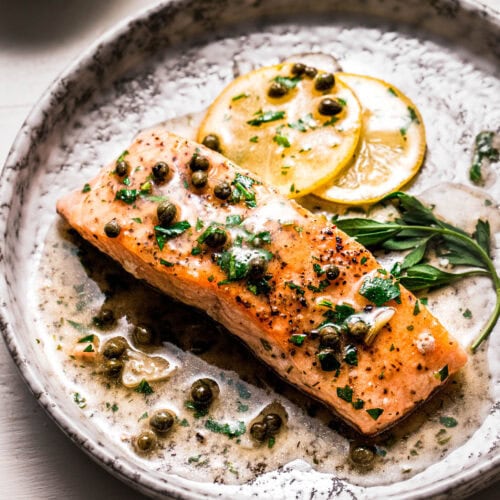
Salmon Piccata
Servings: 4 people
Calories: 355kcal
This quick & easy Salmon Piccata recipe features a tangy lemon-caper butter sauce and is ready in just 15-minutes.
Print Recipe
Equipment
Ingredients
- 1 pound salmon filets
- ½ cup flour
- 3 Tablespoons butter unsalted, divided
- 1 Tablespoon olive oil
- 4 cloves garlic thinly sliced
- ⅓ cup dry white wine
- 1 cup chicken broth low-sodium, divided
- 1 teaspoon cornstarch
- 3 Tablespoons fresh lemon juice
- 3 Tablespoons capers drained
- 2 Tablespoons fresh flat-leaf parsley minced
- Kosher salt and pepper
Instructions
- Pat the 1 pound salmon filets dry and season both sides of all pieces with salt and pepper.
- Add ½ cup flour to a shallow dish; dredge the salmon in the flour to evenly coat. Shake off excess.
- Heat 1 TBSP butter and 1 Tablespoon olive oil in a large nonstick pan or skillet over medium-high heat.
- Sear the fillets in the pan until cooked through (approximately 3-4 minutes per side) then set aside on a platter lightly tented with foil. Do not crowd the salmon fillets in the pan. Work in batches, using a bit more olive oil and butter as required for each batch.
- Reduce the heat to medium and melt 1 TBSP. of the butter in the pan. Add the 4 cloves garlic and cook until golden brown, about 30 seconds. Add ⅓ cup dry white wine, 3 Tablespoons fresh lemon juice and ¾ cup broth, increase the heat to medium-high and cook until the liquid is slightly reduced, about 5 minutes, scraping any browned bits from the bottom of the skillet.
- Whisk 1 teaspoon cornstarch together with the reserved ¼ cup broth. Pour the mixture into the pan and cook for 1 minute or until slightly thickened. Remove from heat.
- Whisk in the remaining 1 TBSP butter, 3 Tablespoons capers and 2 Tablespoons fresh flat-leaf parsley. Season with salt and pepper. Place the salmon fillets back into the pan, gently turning each fillet to evenly coat in the sauce.
- Serve immediately over rice, pasta or vegetables.
Notes
Storing
- Store leftover salmon piccata in an airtight container in the fridge for up to 2 days. Store the sauce and salmon together to keep the fillets moist and flavorful.
- To reheat without overcooking the salmon, slowly warm it in a skillet over low heat until heated through. Add a splash of broth or water to loosen the sauce and keep the fillets from drying out.
- I don’t recommend freezing leftover salmon piccata as the texture of the fillets and sauce is likely to change.
- Pat the salmon fillets dry with paper towels before seasoning. Any excess moisture prevents a crust from developing when pan seared.
- Don’t crowd the skillet. Arrange the fillets in a single layer with space between each fillet so that they cook without steaming. Cook them in batches, if needed.
- To keep the cooked salmon fillets warm, transfer them to a plate and tent them loosely with foil until ready to add them to the sauce in the skillet for serving.
- Serve this salmon piccata immediately. These salmon fillets are best enjoyed right out of the pan with the lemon caper sauce while they’re still warm.
- Achieve the perfect consistency for the sauce by mixing in a cornstarch slurry once the liquid ingredients have reduced over heat. Combining the cornstarch with broth instead of water prevents diluting the flavor of the sauce.
- Use center-cut salmon fillets which are thick, even-sized portions taken from the middle section of the salmon. These fillets are great for their uniform thickness, which ensures even cooking, making them ideal for pan-searing.
- Salmon is perfectly cooked when it flakes easily with a fork but still appears slightly translucent in the center, reaches an internal temperature of 145°F, and feels firm yet springy to the touch.
- Be gentle with the salmon when it’s placed back in the pan. If your fillets feel too delicate to flip, use a spoon to gently bathe each piece in the sauce to help them stay intact.
- A light dusting of flour is all you need for these salmon fillets - just enough to crisp the exterior and help the sauce cling, without creating a thick or gummy crust. Shake off any excess before cooking.
- Dairy-free salmon piccata - Use extra olive oil or dairy-free butter instead of butter. Your sauce will lose some richness, but the final dish will still be delicious.
- Gluten-free salmon piccata - Coat the salmon in rice flour, almond flour, or a 1:1 gluten-free flour blend. Skip anything too dense (like coconut flour).
- Try another type of fish – This salmon piccata recipe will definitely work with cod, and should also work just as well with another mild, flaky white fish like halibut, haddock, grouper, or tilapia.
Nutrition
Calories: 355kcal | Carbohydrates: 15g | Protein: 25g | Fat: 20g | Saturated Fat: 7g | Polyunsaturated Fat: 4g | Monounsaturated Fat: 7g | Trans Fat: 0.3g | Cholesterol: 86mg | Sodium: 505mg | Potassium: 637mg | Fiber: 1g | Sugar: 1g | Vitamin A: 487IU | Vitamin C: 8mg | Calcium: 34mg | Iron: 2mg