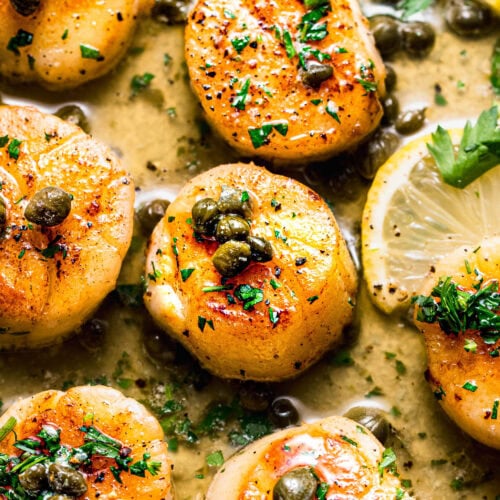
Sous Vide Scallops
Servings: 4 people
Calories: 208kcal
Forget about overcooking your scallops because this recipe for Sous Vide Scallops is foolproof. Finished with a buttery lemon caper sauce.
Print Recipe
Equipment
Ingredients
Scallops
- 1 pound sea scallops
- ½ teaspoon salt
- ¼ teaspoon black pepper
- Zest of 1 lemon
- 1 Tablespoon butter
Lemon Caper Sauce
- 4 Tablespoons unsalted butter
- 2 Tablespoons capers drained
- 1 clove garlic grated or minced
- 2 Tablespoons lemon juice
- 1 Tablespoon fresh parsley minced
- Kosher salt to taste
Instructions
Scallops
- Set sous vide to 122-degrees.
- Season scallops with salt, pepper and lemon zest.
- Place the scallops into a ziplock or FoodSaver bag in a single layer (you may need to use 2 bags).
- Seal using a vacuum sealer. Or, if using a ziplock bag, use the water displacement method.
- Place the bag in the water bath, making sure not to block the intake or output sections of the sous vide, and cook for 30 minutes.
- Remove scallops from the bag and place on a paper towel-lined plate. Pat it very dry with additional paper towels.
- Melt butter in a large nonstick skillet over medium-high heat. When the butter stops foaming, add the scallops and sear until golden brown on both sides, about 40 seconds total. Transfer to a plate and serve with lemon caper sauce if desired (below).
Lemon Caper Sauce
- In a small skillet, melt the butter over low heat.
- Once melted, add the capers and garlic. Bring to a simmer, and continue cooking until fragrant, about 1 minute.
- Remove from the heat and add the lemon juice and parsley. Season to taste with kosher salt. Nestle the sous vide scallops in the sauce and enjoy!
Notes
Storing
- Once the leftover scallops are cool, transfer them to an airtight container and store them in the fridge for up to 2 days. I don’t recommend freezing cooked scallops because they won’t be as delicate and buttery after thawing.
- The best way to reheat scallops is in a skillet over low heat. Melt a little butter in the pan, then sear each scallop for about 1 minute per side. This should be enough to take the chill off without overcooking. Avoid using the microwave if possible, as it tends to zap out the juiciness.
- The best temperature for sous vide scallops is 122°F. Some recipes go up to 125°F, but I find 122°F hits the firm yet silky sweet spot. No rubbery, overcooked scallops here!
- No fancy FoodSaver? Use the water displacement method. After placing the scallops in a heavy-duty ziplock freezer bag, slowly lower the bag into the sous vide bath, letting the water pressure naturally push the air out before sealing the bag just above the waterline.
- Yes, you can use sous vide frozen scallops—just defrost them first. In a pinch, you can place the sealed bag in a bowl of cold water for 30 to 45 minutes. However, the safest way to thaw scallops is in the fridge overnight.
- The scallops will be slightly damp after the sous vide bath. Since moisture is the enemy of searing, you’ll need to blot them fully dry with paper towels to achieve that restaurant-quality crust.
- The scallops are fully cooked after the water bath, which means you need to be careful not to overcook them during the final searing step. Once the melted butter is hot (but not smoking), add the scallops and only sear them for about 20 seconds per side. Flip once, and that’s it.
Nutrition
Calories: 208kcal | Carbohydrates: 5g | Protein: 14g | Fat: 15g | Saturated Fat: 9g | Polyunsaturated Fat: 1g | Monounsaturated Fat: 4g | Trans Fat: 1g | Cholesterol: 65mg | Sodium: 871mg | Potassium: 256mg | Fiber: 0.2g | Sugar: 0.2g | Vitamin A: 532IU | Vitamin C: 5mg | Calcium: 17mg | Iron: 1mg