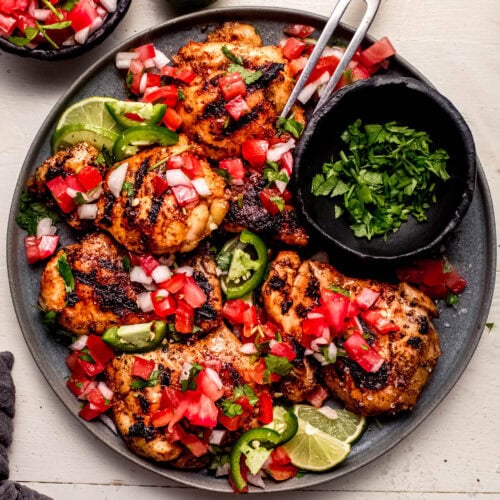
Pico de Gallo Chicken
Servings: 4 people
Calories: 637kcal
Pico de Gallo Chicken features juicy grilled chicken that’s been marinated in a smoky, sweet, and spicy chipotle citrus blend, then topped with a brilliantly fresh homemade Pico de Gallo. It’s an incredibly easy and vibrant meal your grilling routine has been missing!
Print Recipe
Equipment
- Grill optional
- Grill Pan optional
Ingredients
- 2 pounds chicken thighs or breasts, boneless skinless
Marinade
- 1 orange juiced
- 2 Tablespoons apple cider vinegar
- 1 lime zested and juiced
- 2 Tablespoons extra virgin olive oil
- 2 Tablespoons brown sugar
- 4 cloves garlic smashed and peeled
- 1 canned chipotle in adobo sauce optional
- 2 teaspoons dried oregano
- 2 teaspoons ground cumin
- 1 teaspoon kosher salt
Pico de Gallo
- ⅔ cup white onion finely diced, ½ onion
- 1 serrano pepper or jalapeno, finely chopped, ribs and seeds removed for less heat
- 3 Tablespoons lime juice about 3 limes
- ½ teaspoon salt plus more to taste
- 5 roma tomatoes
- ¼ cup cilantro finely chopped, about ½ bunch
Instructions
Pico de Gallo
- In a medium bowl, combine the chopped onion, serrano pepper, lime juice and salt. Let it marinate together while you prepare the tomatoes and cilantro.
- Toss the marinated onions with the tomatoes and cilantro.
Chicken
- In a blender or mini food processor, combine the orange juice, apple cider vinegar, lime zest and juice, oil, brown sugar, garlic, chipotle, oregano, cumin, and salt; process until blended.
- Add this mixture to a ziplock bag, along with the chicken.
- Let sit at room temperature 1 hour, or refrigerated as long as overnight.
- Preheat a grill or grill pan over medium-high heat. Spray your grill generously with cooking spray. Remove chicken from marinade and place on the hot grill. Cook for about 4-5 minutes per side, until cooked through (165-degrees).
- Serve the chicken with pico de gallo spooned on top. Enjoy!
Notes
Storing
- Store any leftovers in an airtight container in the fridge for 3-4 days. Remove any of the Pico de Gallo from your grilled chicken if you intend to freeze it. The chicken will last for a month in the freezer, ready to be thawed overnight in the fridge.
- Microwave your leftovers or heat them in the oven for a couple of minutes if you aren’t in a rush.
- Leftover or excess Pico de Gallo should be stored in a separate airtight container in the fridge and will typically last for up to 3 days. That said, some of the ingredients, such as the tomatoes, will start to release juices and soften over time, making the salsa somewhat watery.
- Be careful while handling the serrano or jalapeno pepper! Wear gloves if you can and wash your hands as soon as you’re done handling them. The juice from the pepper can burn your skin and it’ll be painful if you get it in your eyes.
- Feel free to make the Pico de Gallo ahead of time and store it in the fridge, covered with plastic wrap, for up to 1-2 days at most. The flavors will meld together and intensify!
- Dice and chop the salsa ingredients into even-looking pieces to help create uniformity and the texture that you desire. Larger pieces will create a chunkier Pico de Gallo while smaller pieces will create a more refined Pico de Gallo.
- Removing the seeds and veins from the pepper is an easy way to lessen the spice in this dish. Feel free to leave them in for an extra kick of heat.
- Plan ahead when making this Pico de Gallo Chicken as the chicken pieces need at least an hour to marinate for delicious infused flavor. You can marinate for longer, but then be sure to refrigerate the chicken.
- Don’t marinate the chicken beyond 8-12 hours. The chicken will start to turn slimy and stringy.
- The grilled chicken should reach an internal temperature of 165 degrees F for it to be safe to eat.
- Letting the onions, pepper, lime, and salt marinate together before mixing the tomatoes and cilantro will tone down the onions’ sharp taste while enhancing the flavor.
- Add a smoky flavor to your Pico de Gallo - Use fire-roasted tomatoes or chipotle chiles (smoked jalapenos) for a rich and smoky flavor.
- Try other types of peppers - Use a jalapeno pepper instead of a serrano pepper for a milder version of the Pico de Gallo.
- Add extra heat: Add diced jalapeno to the marinade or leave the seeds and ribs in the serrano pepper when making the Pico de Gallo.
- Vary the texture - Make a more delicate Pico de Gallo with finely diced ingredients or a chunky version by dicing larger pieces, depending on your preference.
- Alternate cooking method: Bake the marinated chicken, topped with the Pico de Gallo and freshly grated Monterey Jack cheese for 20-24 minutes at 400 degrees F.
- Salsa: Instead of using Pico de Gallo, pair a different salsa with your grilled chicken. Easy Chipotle Salsa, Fresh Mango Salsa, and Jalapeno Sesame Salsa are all excellent options!
- Pico de Gallo ingredient swaps: Fresh parsley, basil, or chives can be used instead of cilantro. Feel free to also add more savory veggies to the mix, such as bell pepper and roasted corn. Alternatively, for a sweeter-tasting pico de gallo, replace the tomatoes with mango, strawberries, pineapple, peaches, or watermelon.
Nutrition
Calories: 637kcal | Carbohydrates: 19g | Protein: 39g | Fat: 45g | Saturated Fat: 11g | Polyunsaturated Fat: 9g | Monounsaturated Fat: 21g | Trans Fat: 0.2g | Cholesterol: 222mg | Sodium: 1057mg | Potassium: 822mg | Fiber: 2g | Sugar: 13g | Vitamin A: 1001IU | Vitamin C: 38mg | Calcium: 69mg | Iron: 3mg