

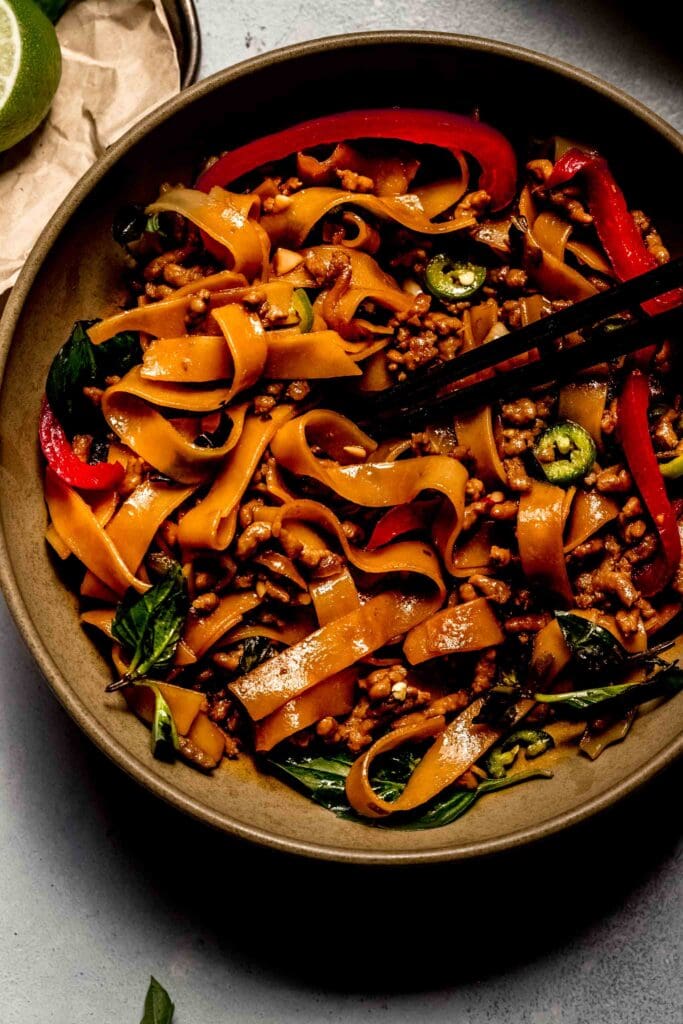
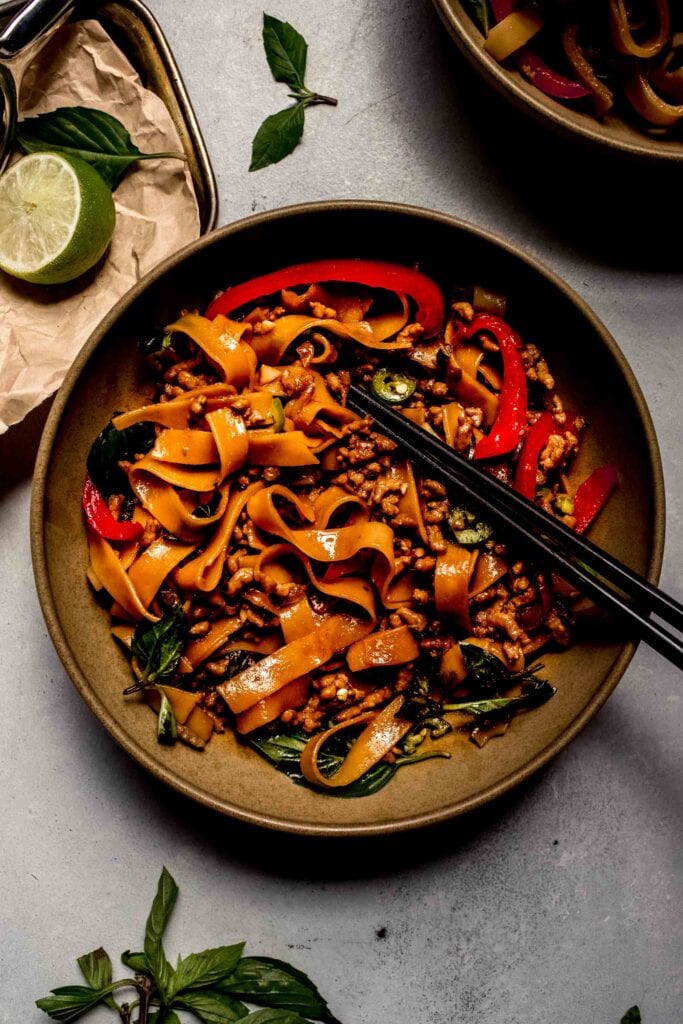
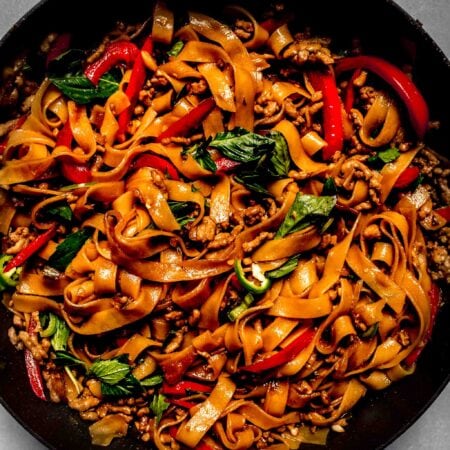
Pad Kee Mao, also known as Drunken Noodles, is a traditional Thai dish with ground pork, wide rice noodles and plenty of fresh basil. Doused in a sauce typical of Thai cuisine which is perfectly balanced with heat, tanginess and sweetness – coming from Thai chiles, rice wine vinegar and sweet soy sauce.
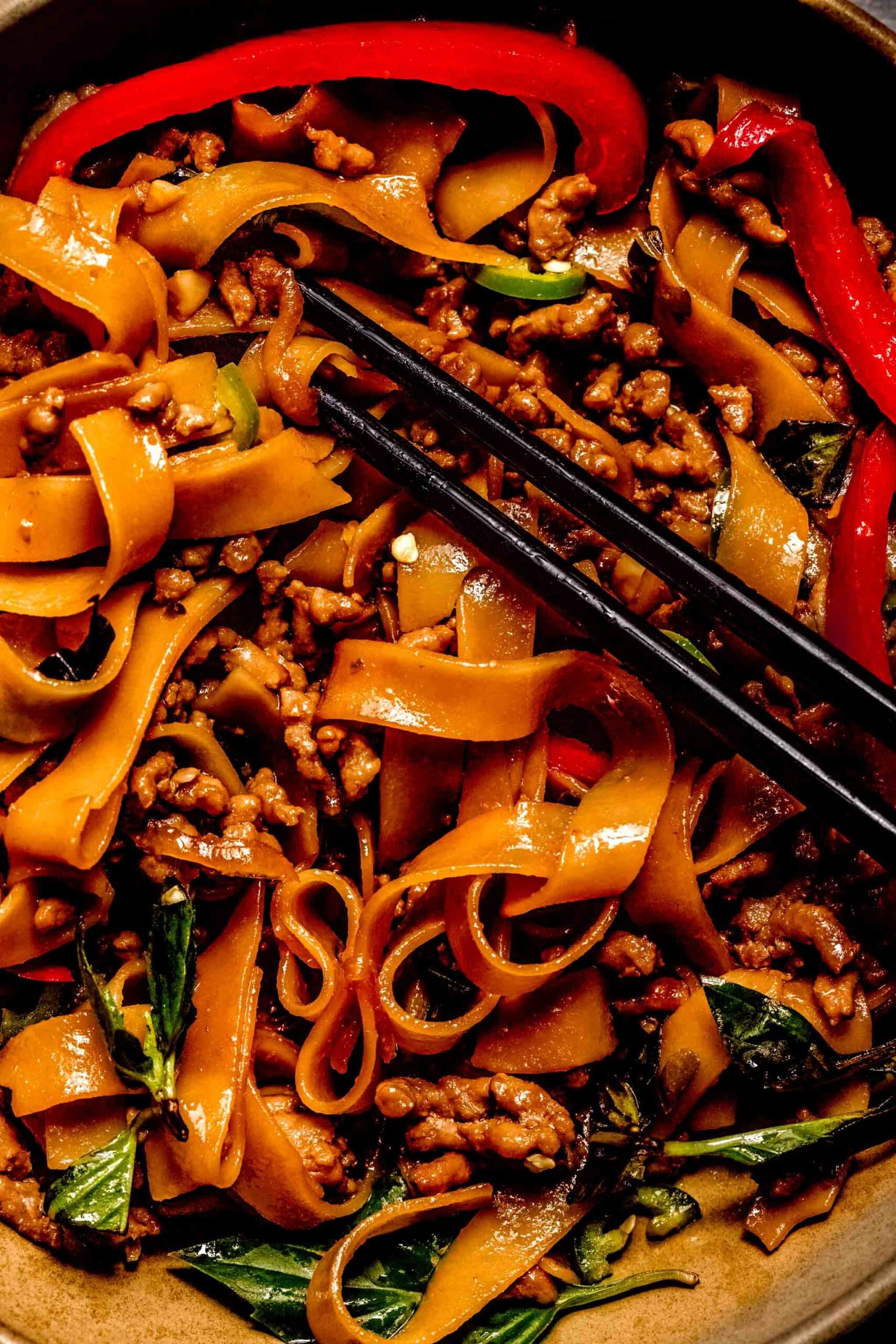
Table of Contents
Reader
Love


Hi, I came across you blog of pad Kee Mao. I tried it today and it was totally AMAZING and DELICIOUS. Thank you for this recipe.
–
Why is Pad Kee Mao called Drunken Noodles?
Also known as Thai drunken noodles, Pad Kee Mao doesn’t actually have any alcohol in it. No one actually knows the true origin of the name. However, in the thai language, khi mao means drunkard.
It’s believed that after a full day of drinking, thai men would come home and enjoy this dish, believing that the noodles would draw some of the alcohol out of their systems and help with hangovers in the morning.
Another theory is that you would need to be drunk to enjoy this dish, as it is so spicy, the only way that you can handle the heat is to be numbed a bit from the alcohol.
Wherever the name drunken noodles comes from, I’m just here to tell you that they are super yummy.

Ingredient notes
- Sweet Soy Sauce – Aka kecap manis. You can purchase this online, or make my homemade version (all you need is soy sauce and brown sugar).
- Fish Sauce – Fish sauce is sold in the asian foods aisle of major grocery stores. This is my favorite brand. Or, try one of these fish sauce substitutes.
- Rice Vinegar
- Garlic
- Serrano Peppers – You can also use thai chilies (more heat) or jalapeno peppers (less heat).
- Vegetable Oil
- Onion
- Ground Pork – You can also swap in ground chicken, turkey or ground beef.
- Red Bell Pepper – Or green or yellow bell pepper.
- Thai Basil – You can also use regular basil. Or, try one of these substitutes for basil.
- Lime
You may need to make a stop at the Asian market to find the wide rice noodles, sweet soy sauce and Thai basil. But, if you don’t have an Asian market near you, feel free to do some improvising by using the following substitutions:
Pad Kee Mao Sauce
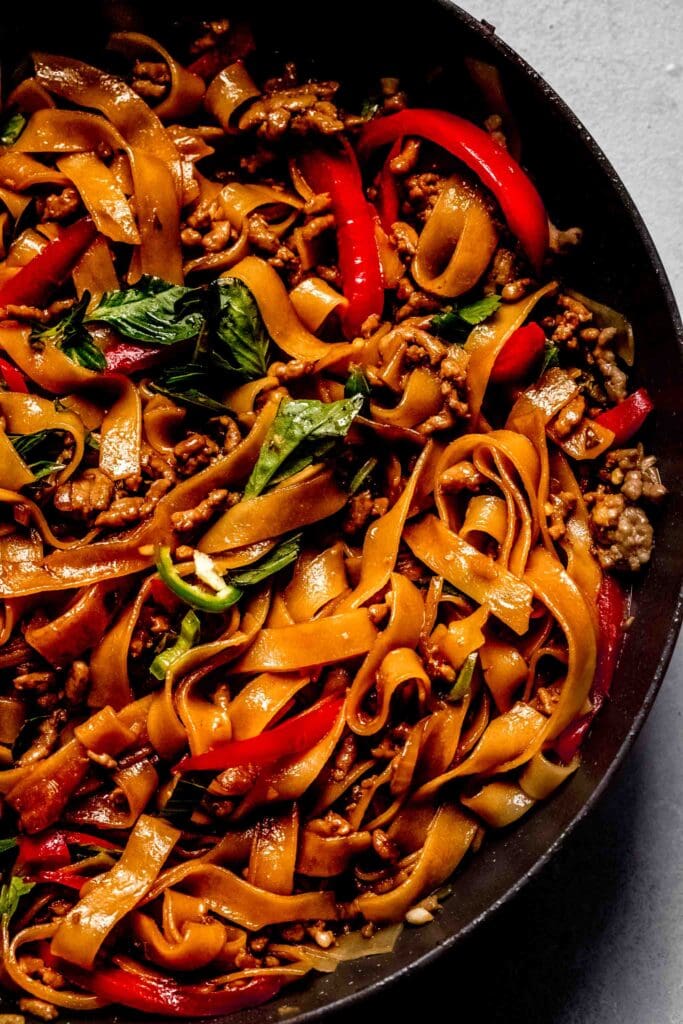
To make the sauce, simply stir together 1/4 cup sweet soy sauce, 1/4 cup fish sauce and 2 teaspoons rice vinegar.
If you can’t find the sweet soy sauce (or kecap manis), you can make your own by using this homemade kecap manis recipe.
Pad Kee Mao Noodles
I’m using traditional wide rice noodles in this recipe. You can often find them in the Asian foods aisle. However, if you’re unable to find them, you can also substitute Pad Thai noodles or even make a spaghetti pad kee mao.
Cook your noodles to just short of al dente and add it in the same manner provided in the recipe.
Thai Basil Substitution
If you’re unable to find Thai basil at your grocery store, you can substitute regular basil. Thai basil has a bit more of a licorice flavor, but you won’t notice a huge difference.
How to Make It

Step 1
Soak the noodles
- Soak the rice noodles in warm water for 30 minutes to an hour.
Step 2
Make the sauce
- Stir together the fish sauce, sweet soy sauce and vinegar.

Step 3
Chop the aromatics
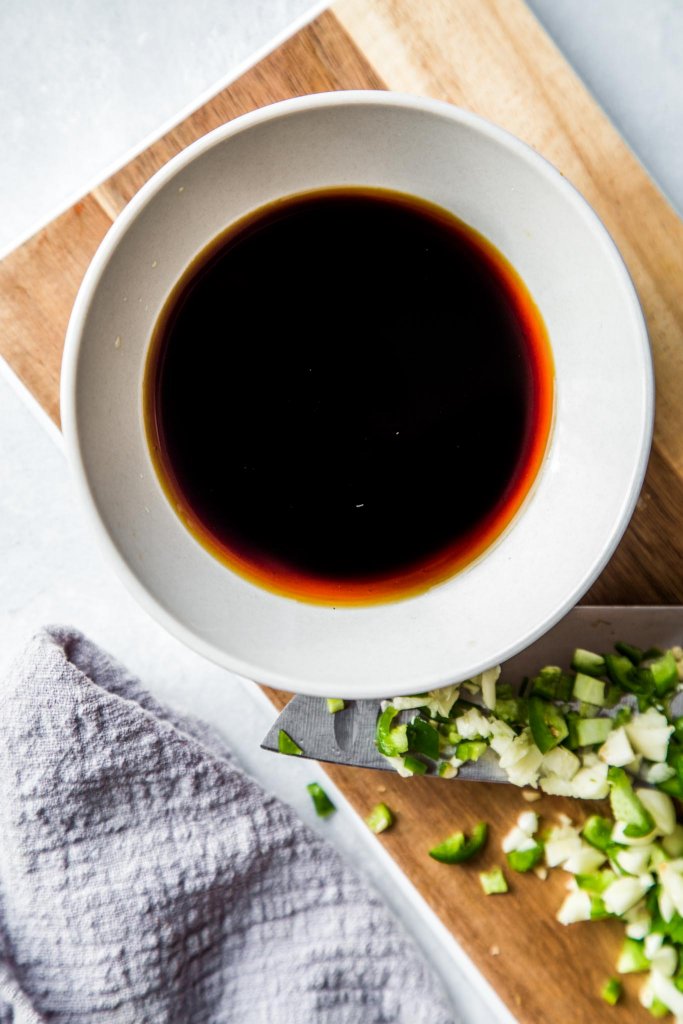
- Chop the garlic and 3 of the chiles together. Chop the other chile, and set aside.
Step 4
Cook the chiles
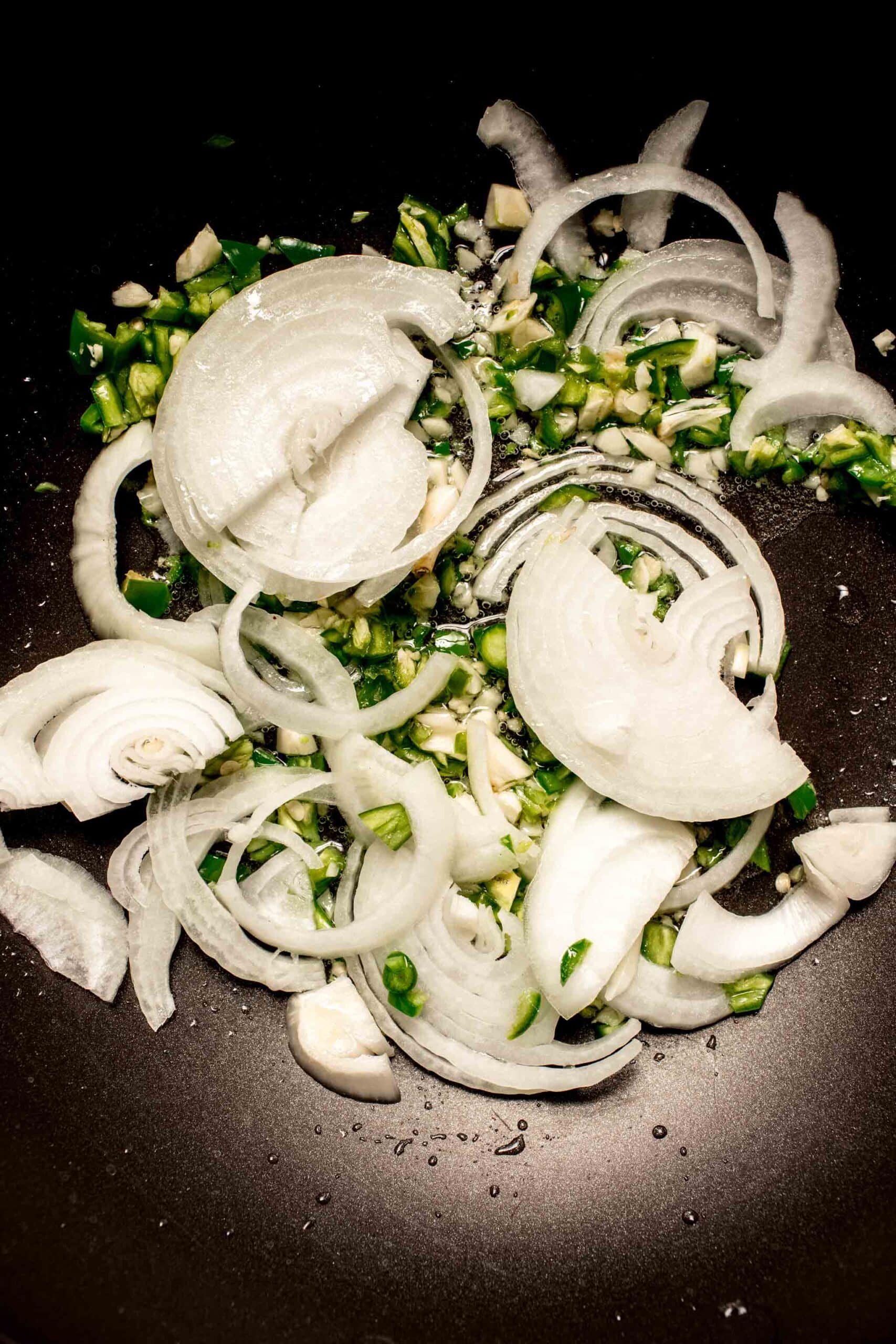
- Heat a wok or large skillet over medium-high heat.
- Add the oil, the garlic/chile mixture and the onion. Cook, stirring constantly, until the garlic releases its fragrance, about 30 seconds.
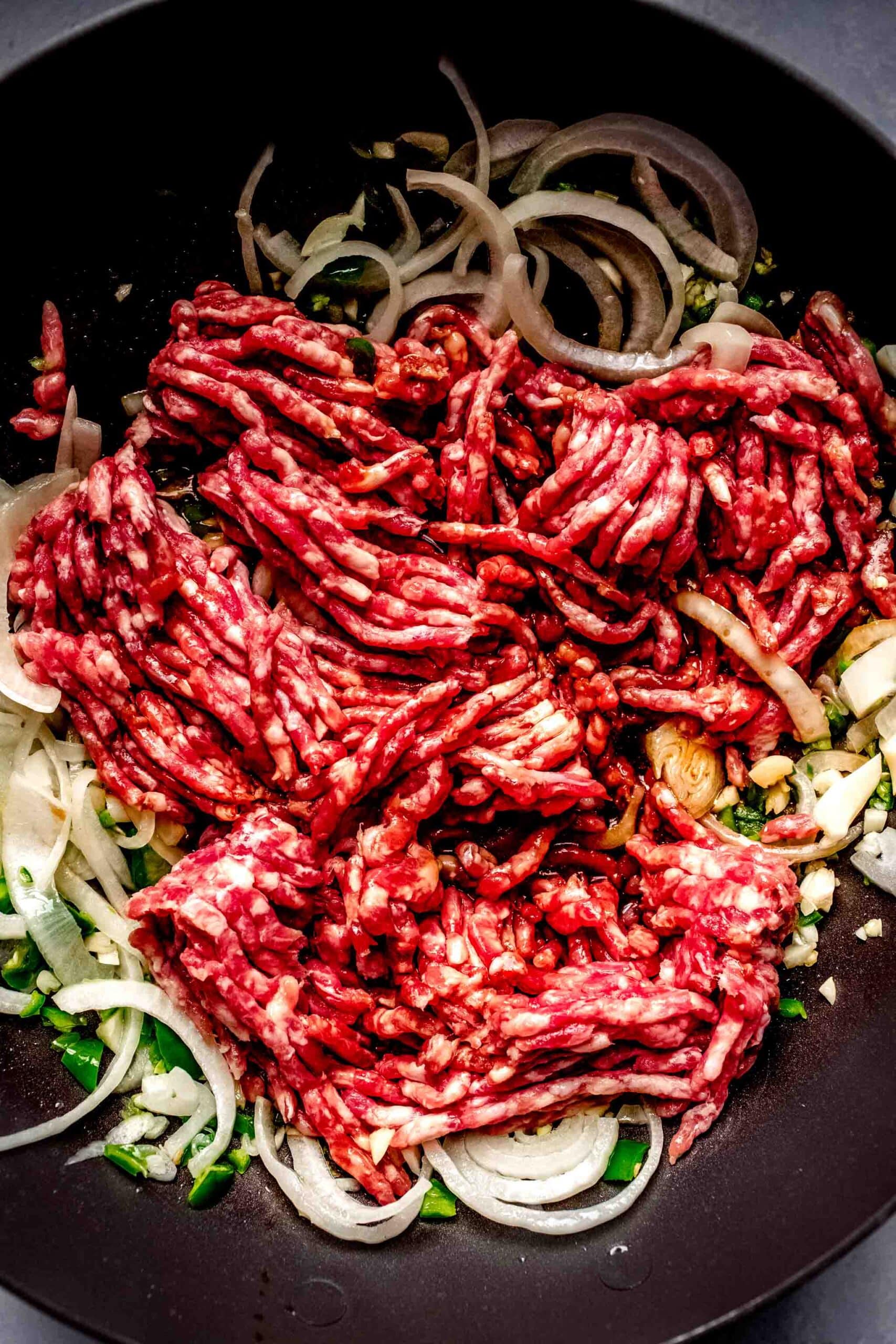
Step 5
Add the pork
- Add the pork and a splash of the sauce. Cook 5 minutes.
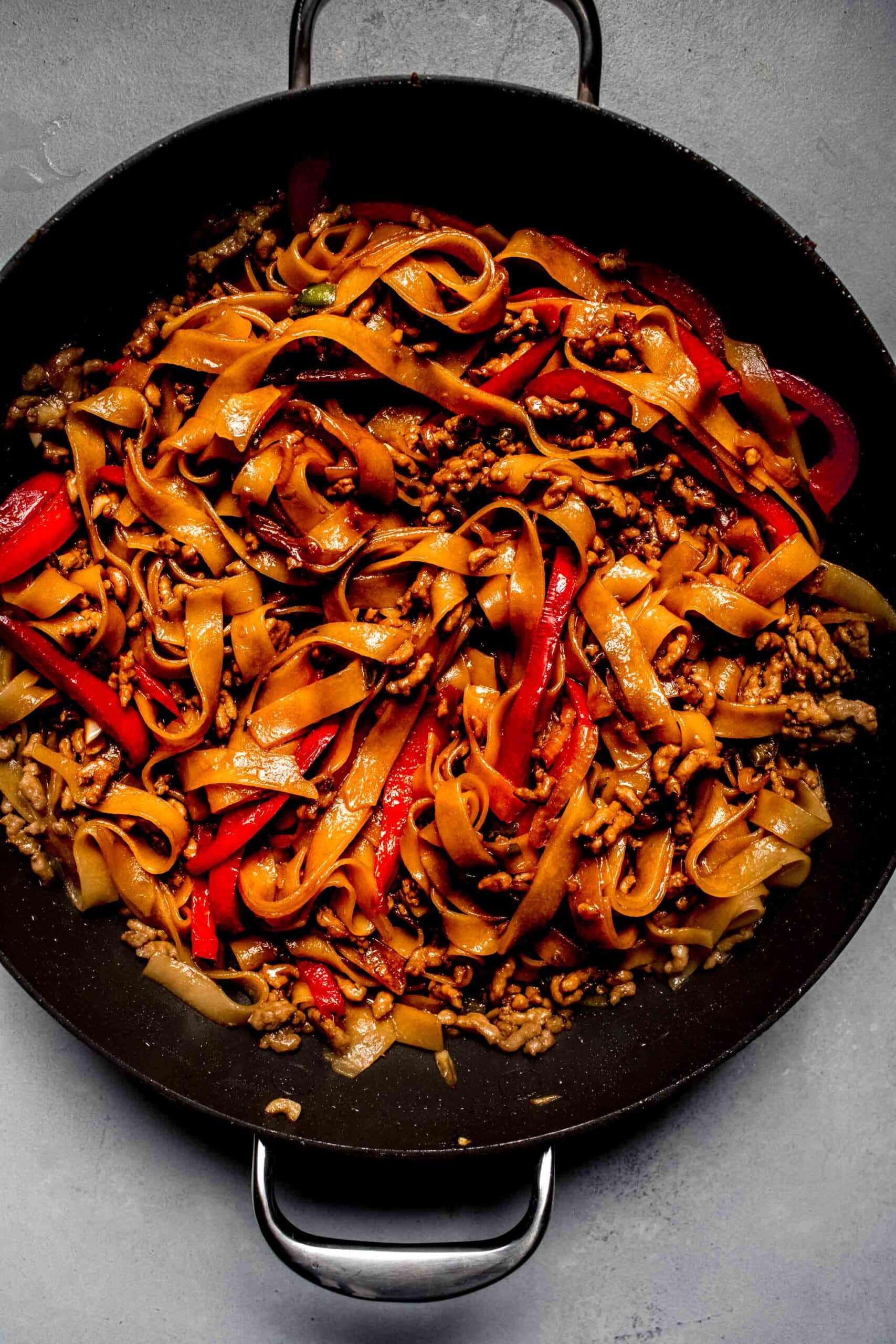
Step 6
Add the noodles
- Add noodles and bell peppers. Increase heat to high, and add the sauce.
- Cook until all noodles are coated with sauce and it thickens, about 8-10 minutes.
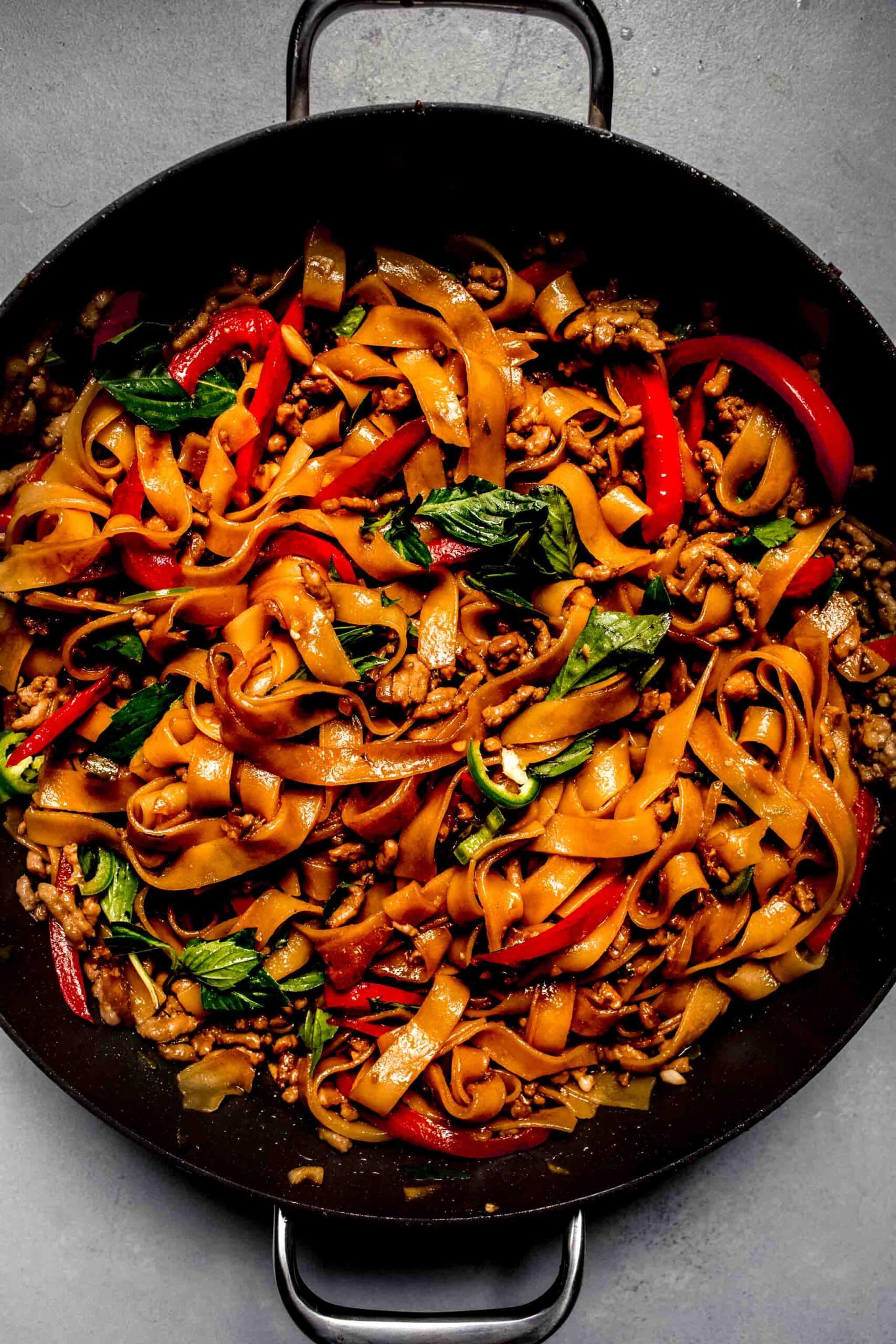
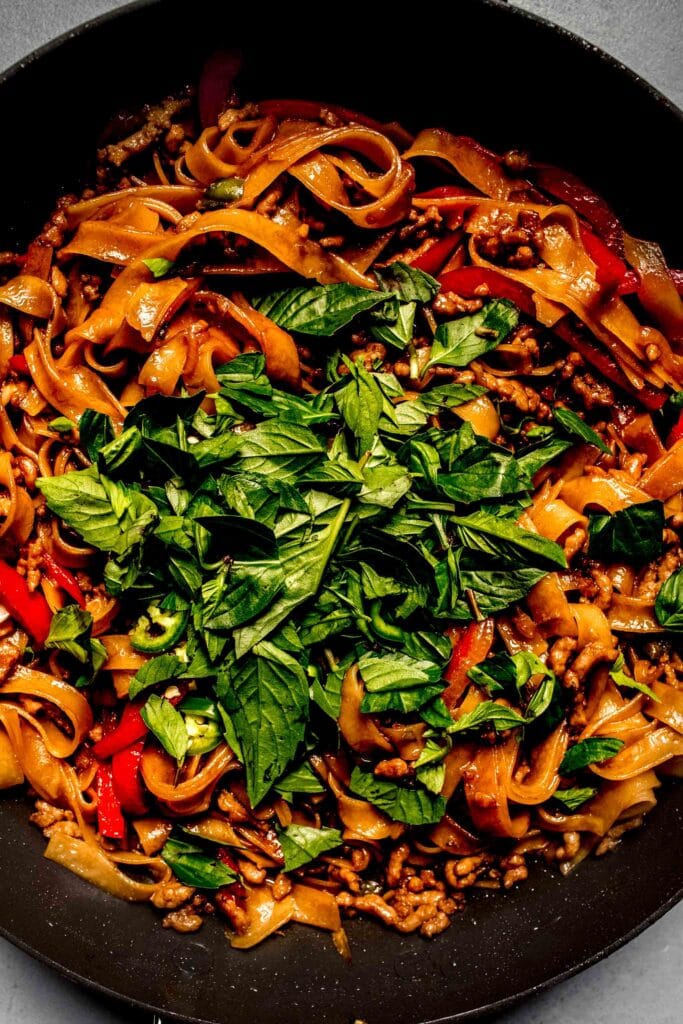
- Add basil, lime juice and the additional chile.
- Enjoy!
Recipe tips
- Use a potato masher to break up the pork as it cooks.
- To keep your basil fresh at home trim the ends and place them in a glass of water. Place a plastic bag over the top and keep it on your counter (not the refrigerator). It should last for nearly a week this way.
How to make ahead and store
- Leftovers will keep in the refrigerator for up to 3 days. Reheat in the microwave or in a skillet, adding a splash of water, if needed.
FAQ
It is pronounced much like it looks – here’s a handy audible demo.
This dish features rice noodles, ground pork, and fresh basil. The sauce is perfectly balanced with heat, tanginess and sweetness – coming from thai chiles, rice wine vinegar and sweet soy sauce.
This drunken noodles recipe is VERY SPICY. To cut back on the heat a bit, use only the two chiles that are chopped with the garlic. You can skip the additional chile which is sprinkled on top of after cooking.
The tangy, lightly sweet sauce, paired with the ground pork and chewy rice noodles is what makes this dish so good. They’re also very spicy, so are definitely for spicy food lovers!
Pad Thai is not nearly as spicy as Kee Mao. Pad Thai is made with a sweet tamarind-based sauce, served with scrambled egg and is sprinkled with chopped peanuts at the end.
Kee Mao is much spicier than Pad See Ew. Pad See Ew is a bit sweeter and much more mild.
What to serve with it

Erin’s wine pairings
- Riesling, Gewürztraminer, Pinot Gris: Look for a white wine with just a hint of sweetness to it – It’s a great way to tame down the heat in this dish.
- Rosé is another great match – It’s acidity, and light body will pair nicely with the Thai aromatics. (Here are some great rosé wines under $10)
- Bubbles – Prosecco, Cava and Champagne are all fun and unexpected wines to pair with spicy Thai dishes.
More Thai food recipes
More flavorful noodle dishes to try
-
new!
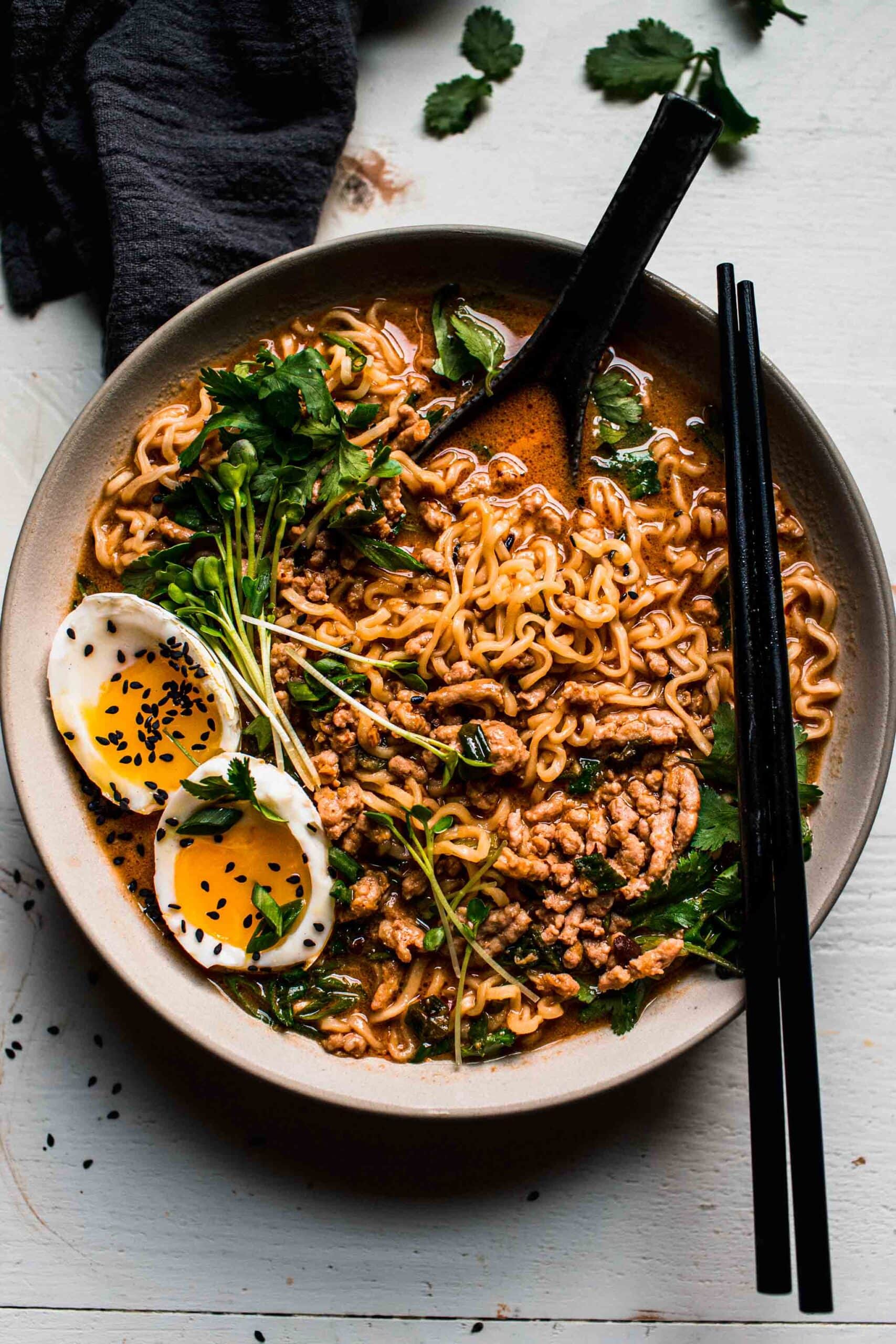
Tan Tan Ramen
-
new!
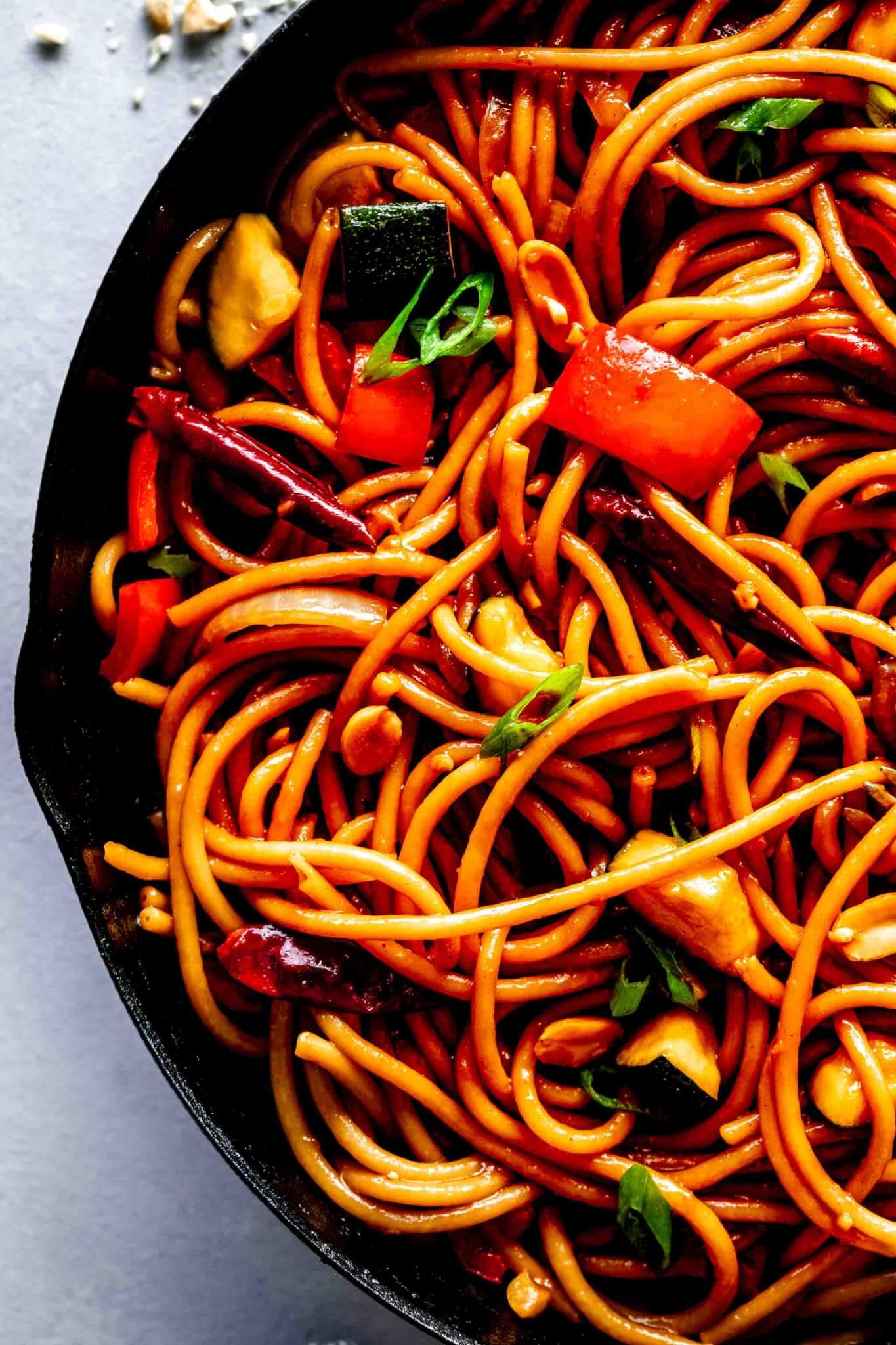
Kung Pao Noodles
-
new!
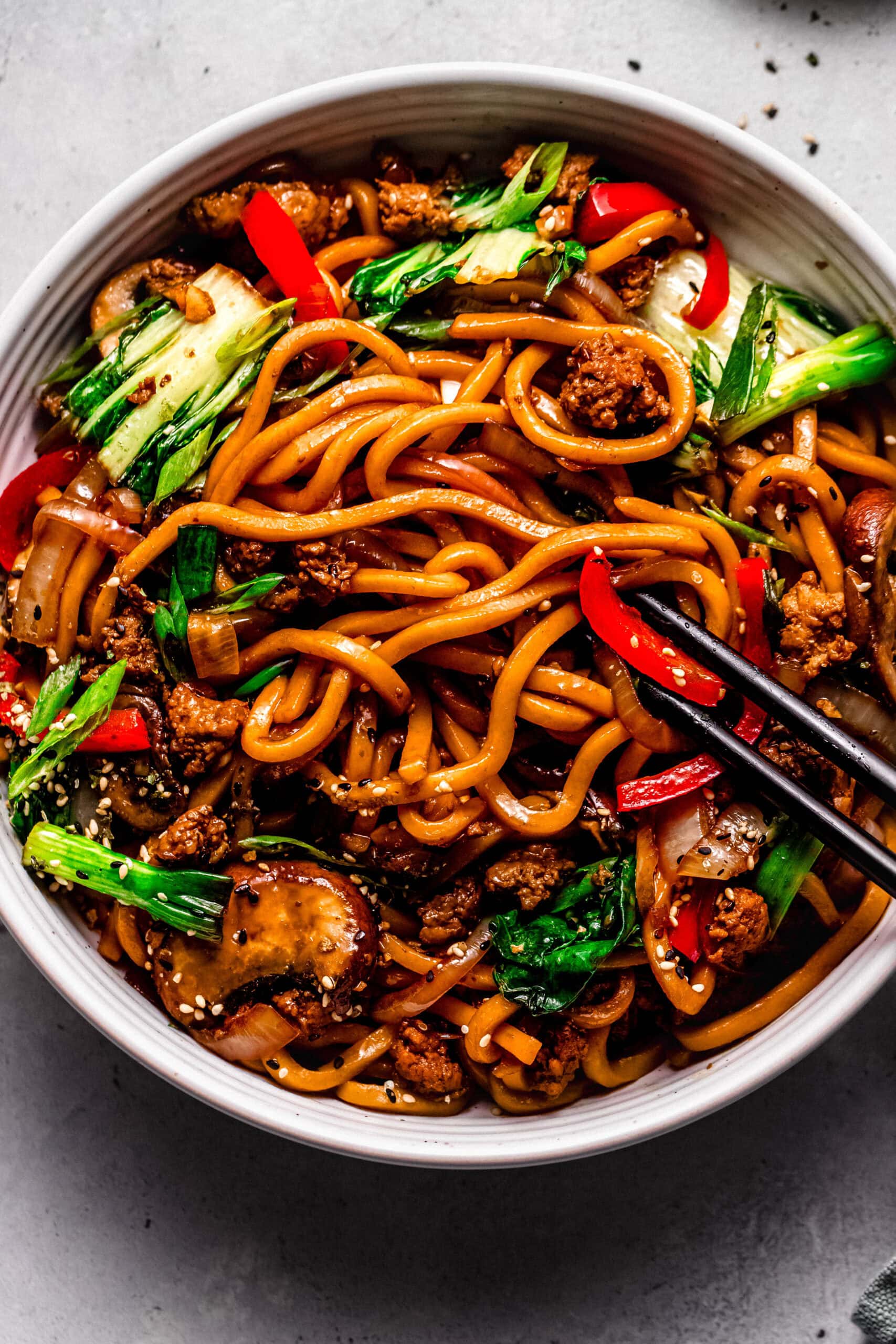
Yaki Udon
-
new!
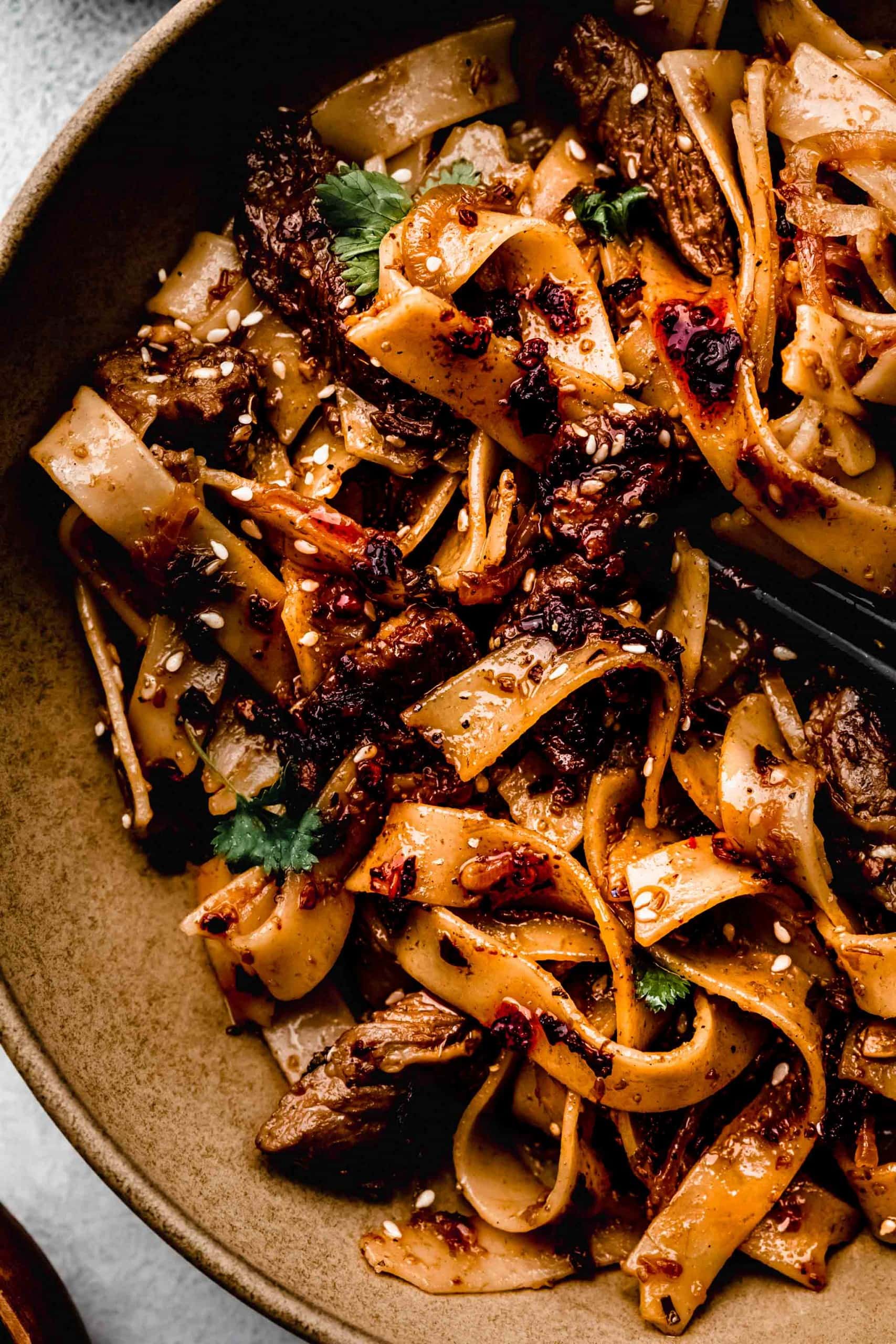
Cumin Lamb Noodles
Plus check out these → 17+ Sauces for Rice Noodles.

Did you try this pork pad kee mao recipe?
If you loved these ground pork Thai noodles I would appreciate it so much if you would give this recipe a star review! Also, be sure to snap a picture of your finished dish and share it with me on Instagram using the hashtag #platingsandpairings and tagging me @platingsandpairings.
For more great Platings and Pairings recipes, be sure to follow me on Instagram, TikTok, Pinterest and Facebook.
Full Recipe
Pad Kee Mao (Pork Drunken Noodles)
Equipment
Ingredients
- 1/4 cup fish sauce
- 1/4 cup sweet soy sauce
- 2 teaspoons rice vinegar
- 6 cloves garlic
- 4 serrano peppers (or thai chiles)
- 3 Tablespoons vegetable oil
- ½ large onion (thinly sliced)
- 1 pound ground pork
- 1 red bell pepper (sliced)
- 12 ounces wide rice noodles
- 2 handfuls Thai basil (or regular basil, roughly torn)
- 1 lime (juiced)
- Lime wedges (for serving)
Instructions
- Soak the 12 ounces wide rice noodles in warm tap water for 30 minutes to an hour.
- In a small bowl, stir together the 1/4 cup fish sauce, 1/4 cup sweet soy sauce and 2 teaspoons rice vinegaret aside.
- Roughly chop the 6 cloves garlic and 3 of the serrano peppers together. Chop the other serrano, and set aside.
- Preheat a wok or large skillet over medium-high heat; when hot, add the 3 Tablespoons vegetable oil, the garlic/chile mixture and the ½ large onion. Cook, stirring constantly, until the garlic is fragrant, about 30 seconds. Add the 1 pound ground pork and a splash of the sauce. Cook, breaking up the meat with a wooden spoon or potato masher, until the pork is cooked through, about 5 minutes.
- Drain the noodles and add them with the 1 red bell pepper to the pan. Increase the heat to high, and add the sauce. Cook, tossing everything together and separating the noodles, until all ingredients are coated with the sauce and it thickens slightly, about 8-10 minutes.
- Toss in the 2 handfuls Thai basil, lime juice and the additional chile. Serve immediately with lime wedges on the side.
Notes
- Leftovers will keep in the refrigerator for up to 3 days. Reheat in the microwave or in a skillet, adding a splash of water, if needed.
- Use a potato masher to break up the pork as it cooks.
- To keep your basil fresh at home trim the ends and place them in a glass of water. Place a plastic bag over the top and keep it on your counter (not the refrigerator). It should last for nearly a week this way.
Nutrition
This pork drunken noodles post was originally published in 2018. It was updated in 2022 to add new photographs and information. The drunken noodles with pork recipe remains the same. Enjoy!

Leave a Reply