

These vegan Gochujang Noodles elevate the classic noodle-and-sauce combo to a whole new level. A glossy, spicy, and savory sauce gets tossed with tender udon noodles and crisp vegetables, creating a bowl that’s packed with deep, layered flavor. Best of all, it’s ready in just 30 minutes!

Table of Contents
After trying these saucy Gochujang Noodles, you’ll never look at Udon noodles the same way again. This recipe combines bouncy chewy noodles and stir-fried vegetables in a spicy, savory, and nutty gochujang sauce.
This dish starts with an exceptionally good sauce! Gochujang is a Korean pantry staple and one of my all-time favorite ingredients. This fermented chili paste is spicy, subtly sweet and tangy, and deeply savory, made from gochugaru (Korean chili flakes), fermented soybeans, glutinous rice, and salt. It serves as the backbone of many Korean dishes, including the sauce for these noodles.

Ingredient notes

- Gochujang paste – Look for gochujang paste in the Asian foods aisle of your grocery store. You can also buy it on Amazon. I’ve used 3 tablespoons of this paste which is quite spicy for me. You can vary this depending on how spicy you like your food.
- Soy sauce – I prefer a low-sodium soy sauce to keep this recipe balanced, but use regular soy sauce if you prefer a bolder level of saltiness.
- Mirin – This is a sweet, low-alcohol Japanese rice wine that adds mild sweetness, umami, and a glossy finish to this sauce.
- Rice vinegar – Adds bright acidity to the sauce. Rice wine vinegar works too, or substitute apple cider vinegar, white vinegar, white wine vinegar, or lime juice.
- Brown sugar – A touch of sweetness to round out the flavors. Maple syrup can be used instead.
- Udon noodles – You’ll most often find udon noodles in the produce section of your grocery store. Cook until still slightly chewy and rinse under cold water to stop any further cooking.
- Avocado oil – Vegetable oil or canola oil works well too.
- Yellow onion and red bell pepper – Typical veggies that are found in Asian-style noodle dishes.
- Green onions – These add a mild oniony bite to the dish without overpowering the rest of the ingredients. Plus more for serving.
- Garlic – Freshly minced garlic cloves always taste the best! It’ll add a delicious depth of flavor to the sauce.
- Sesame seeds – A finishing garnish for texture and nuttiness. You can also use furikake (a Japanese seasoning blend) or chile oil, for serving (optional).
- Fresh basil leaves – Or cilantro, for garnish.
How to make it
Step 1: Make the sauce and cook noodles
- In a medium bowl, whisk together the gochujang, low-sodium soy sauce, mirin, rice vinegar and brown sugar. Set aside.
- Bring a medium pot of water to boil over medium-high. Add the udon and cook according to the package directions.
- Drain and quickly rinse the noodles with cold water to stop the cooking. Transfer the noodles to a medium bowl and drizzle with a little oil to prevent sticking.
Step 2: Saute the veggies
- In a wok or a large pan, heat the oil over medium-high heat.
- Add the onion and cook until just beginning to soften, 2-3 minutes.
- Add the red pepper and cook for about 3 minutes longer.
- Stir in the green onions and garlic; cook for 1 minute.
Step 3: Assemble and serve
- Add the noodles and sauce, tossing until the noodles are coated and glossy. Taste and adjust any seasonings, if needed.
- Enjoy topped with fresh basil or cilantro leaves, and sesame seeds or furikake, as desired.

Flavoring udon noodles with homemade condiments
To take your Gochujang noodles to the next level, try adding one of these homemade condiments for an extra layer of flavor and texture:
- Sweet Soy Sauce: Kecap manis features a thick, syrupy texture. It’s just as versatile as regular soy sauce, but its natural sweetness makes it especially useful for balancing flavors or giving your dishes an extra boost.
- Spicy Chili Crisp: This homemade Chili Crisp Recipe comes together in just 15 minutes and delivers a bold punch of flavor to noodles, dumplings, scrambled eggs, and beyond. It’s the ultimate spicy, tangy, crunchy condiment to keep in your fridge! Add it to these Gochujang noodles for an extra kick of heat.
Tips and tricks
- Before making this recipe, visit your local Asian grocery store. There, you’ll discover a wide range of udon noodles and top-quality condiments for the sauce.
- This recipe comes together quickly, so I recommend prepping the veggies and sauce before you start cooking. You can even do this a day ahead and store them in separate containers in the fridge.
- Give the sauce a taste before it goes into the pan to ensure the flavor balance is right. If it tastes too salty, add a pinch more sugar or mirin; if too sweet, finish with a dash more soy sauce or rice vinegar.
- For perfectly crisp-tender vegetables, high heat is essential. Make sure your wok or skillet is hot before adding anything. Look for shimmering, lightly smoking oil as your cue.


Variations
Similar to other noodle stir-fries, Gochujang noodles can easily be customized to your liking. Feel free to get creative with this recipe, or try these ideas to make it your own:
- Add meat: Add in ground meat, leftover sliced chicken breasts or thighs, or opt for tender beef strips. Even sliced lamb, pork loin, or shrimp will work well!
- Boost protein: Add in tofu or tempeh for protein-rich Gochujang noodles.
- Add more vegetables: Mix and match the vegetables in the recipe with even more veggies like snap peas, mushrooms, broccoli, edamame, Napa cabbage, zucchini, baby corn, and spinach.
- Customize the sauce: Boost the umami flavor by stirring fish sauce or miso paste into the stir fry sauce. Or, for more heat, add chili oil, Sriracha sauce, or diced fresh chilies. For my ideas, check out these 15+ Tasty Sauces for Udon!
- Extra kick of heat: Increase the Gochujang paste in this recipe if you enjoy a spicier dish.
Serving suggestions
First things first: never skip the garnishes! Small finishing touches, such as green onion, sesame seeds, furikake, chili oil, or a drizzle of sesame oil will completely transform both the flavor and the look of the dish.
Apart from the garnishes, try these delicious side dishes to pair with your Gochujang noodles:
- Gyoza or Potstickers with Dipping Sauce
- Or check out these 30+ Asian Side Dishes!

Storing
- These Gochujang noodles are best served fresh out of the skillet, as udon noodles tend to become gluey and sticky when reheating. Still, if you have leftovers, feel free to store them in an airtight container in the fridge for 2 to 3 days.
- To reheat, microwave the leftovers for 1 to 2 minutes or warm them in a skillet over medium heat with a drizzle of oil until heated through.

Erin’s wine pairings for these Gochujang noodles
Pair your Gochujang noodles with one of these favorites:
- Sake is an easy choice for this noodle recipe. Look for Junmai or Honjozo sake, both of which offer a clean, slightly fruity flavor that pairs beautifully with the umami-rich sauce.
- Alternatively, if you have an easier time finding it, go with a versatile white wine like Riesling or Pinot Grigio.
-
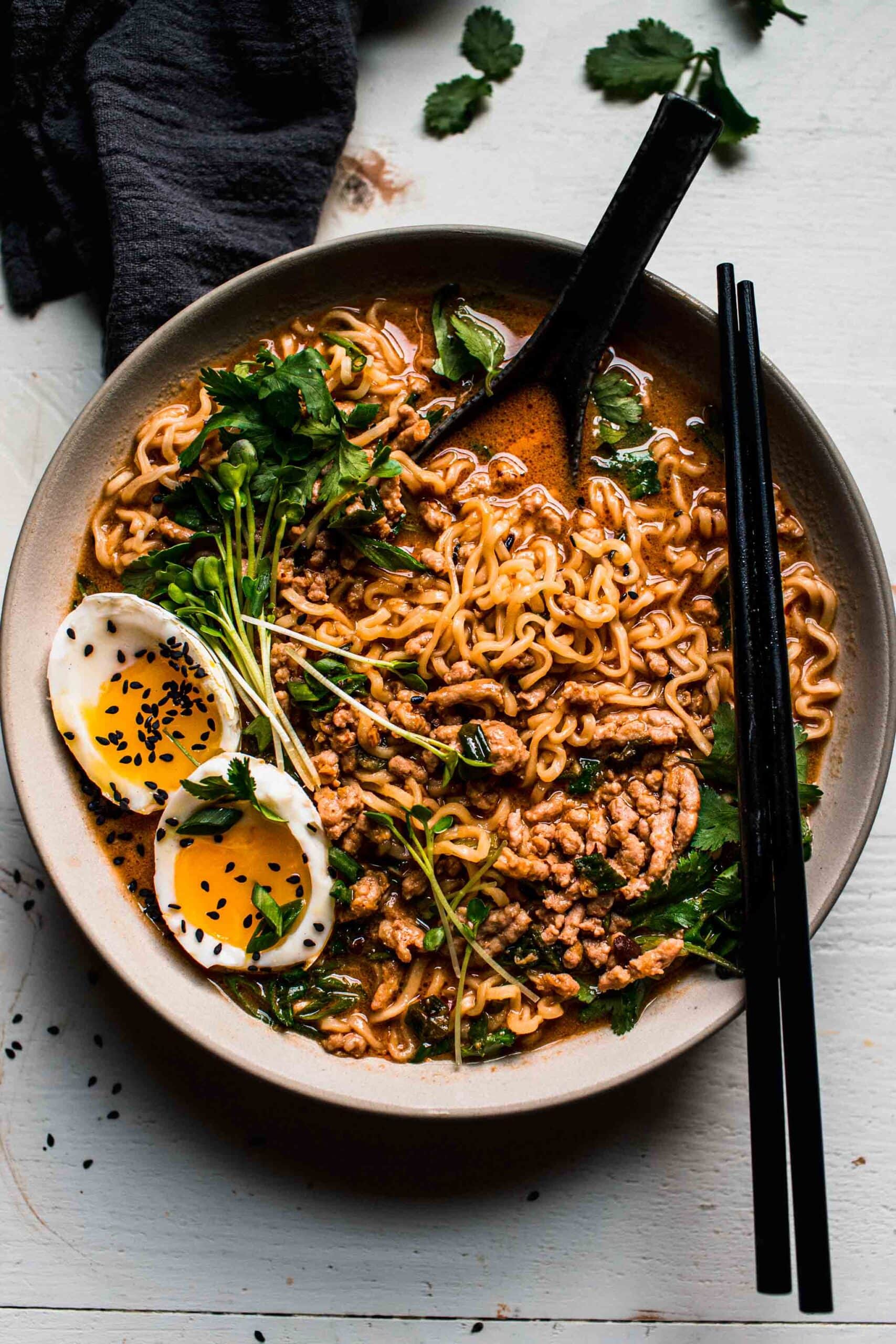
new!
Tan Tan Ramen
-
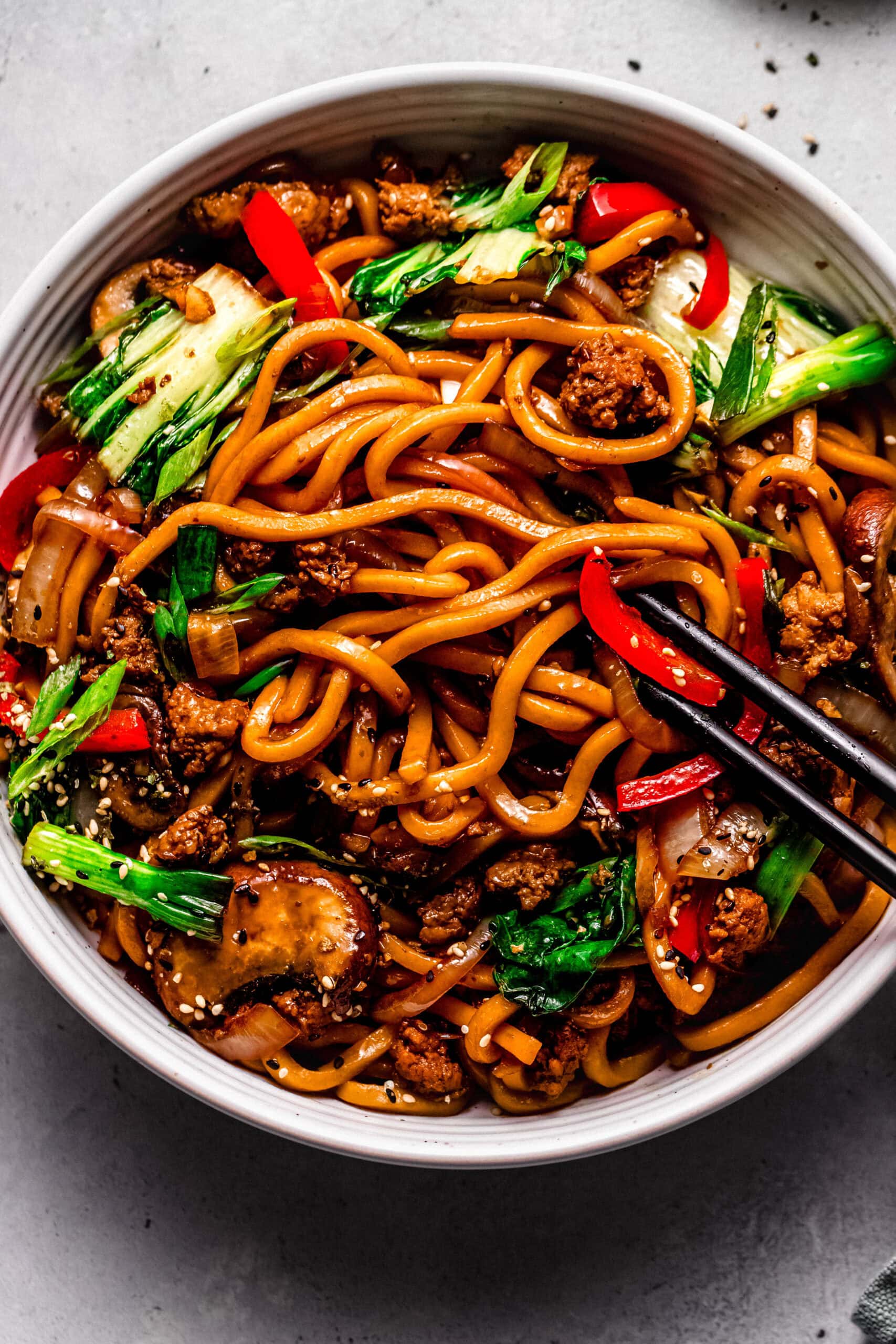
new!
Yaki Udon
-
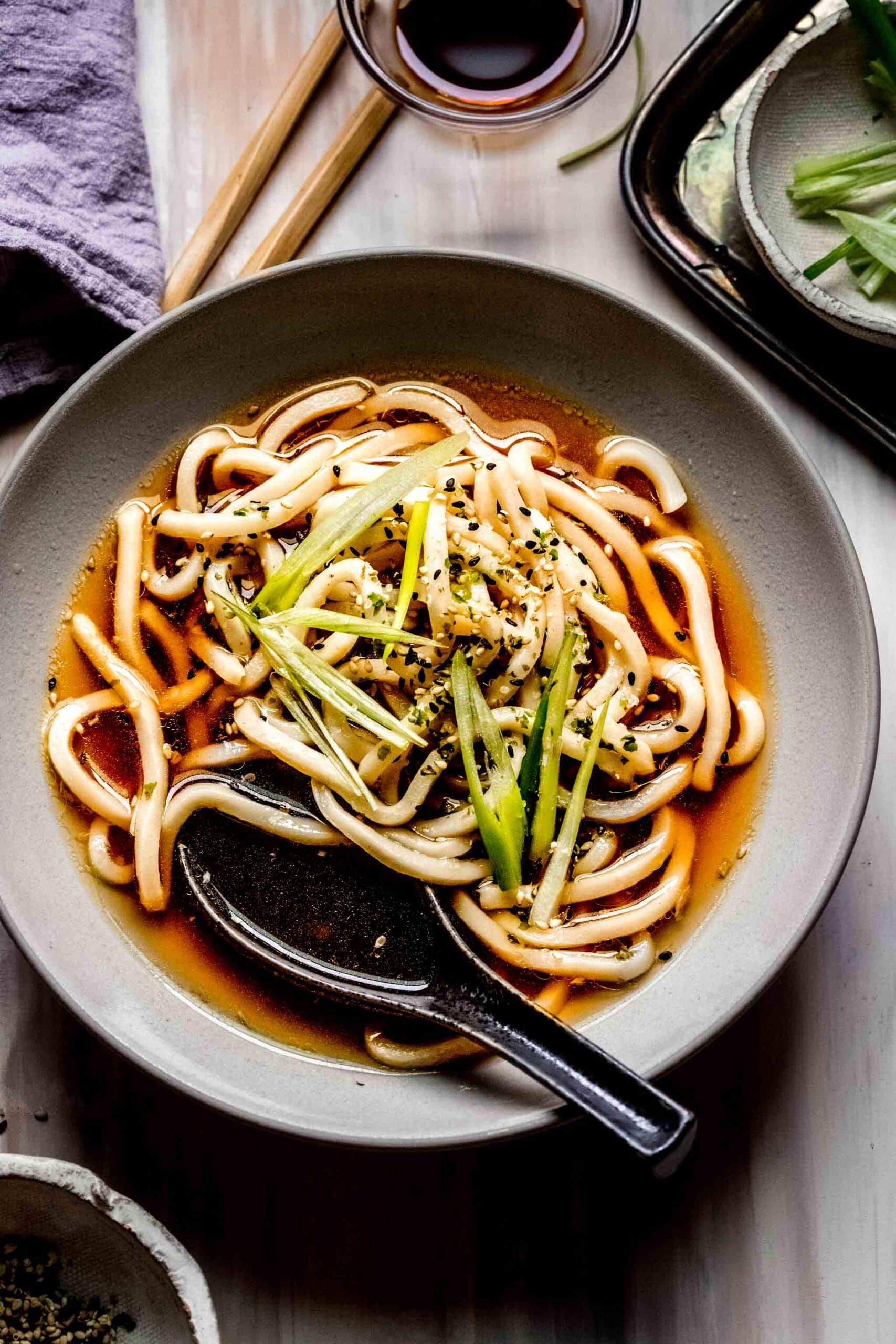
new!
Udon Noodle Soup
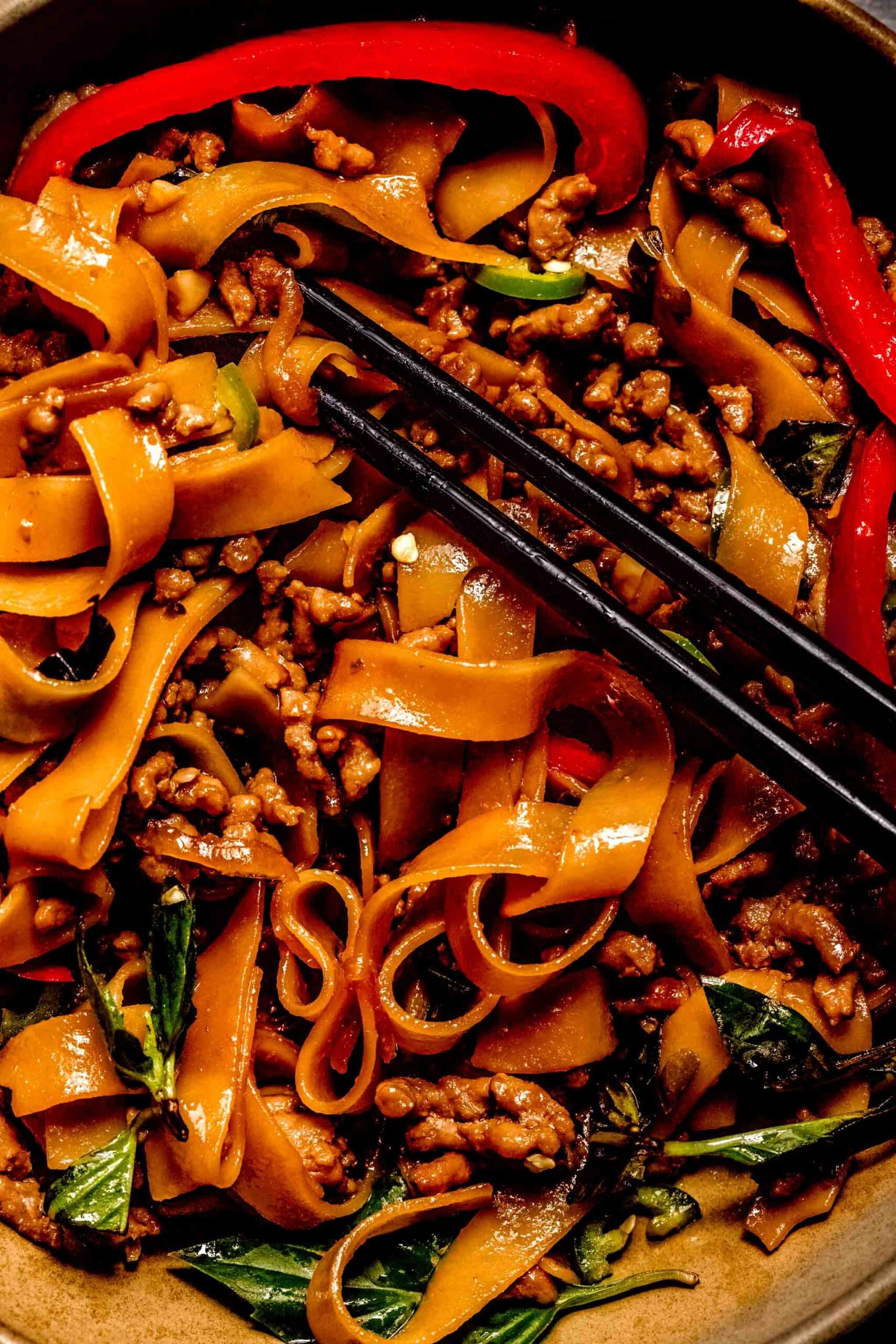

Did you make these Gochujang noodles?
If you loved these Gochujang noodles, I would appreciate it so much if you would leave a ⭐️star review⭐️! Also, be sure to snap a picture of your finished dish and share it with me on Instagram using the hashtag #platingsandpairings and tagging me @platingsandpairings.
For more great Platings & Pairings recipes, be sure to follow me on Pinterest, Facebook, YouTube, Twitter, and TikTok.

Full Recipe
Gochujang Noodles
Ingredients
- 2-3 Tablespoons gochujang paste (depending on how spicy you like it, 3 TBSP is quite spicy)
- 2 Tablespoons soy sauce (low-sodium )
- 1 Tablespoon mirin
- 1 Tablespoon rice vinegar
- 1 Tablespoon brown sugar
- 2 7-ounce packages fresh udon noodles
- 1 Tablespoon avocado oil (or vegetable or canola oil)
- ½ yellow onion (thinly sliced)
- 1 red bell pepper (thinly sliced)
- 3 green onions (sliced into1-inch pieces, plus more for serving)
- 4 cloves garlic (minced)
- Sesame seeds (furikake or chile oil, for serving (optional)
- Fresh basil leaves or cilantro (to garnish)
Instructions
- In a medium bowl, whisk together the 2-3 Tablespoons gochujang paste, 2 Tablespoons soy sauce, 1 Tablespoon mirin, 1 Tablespoon rice vinegar and 1 Tablespoon brown sugar.
- Bring a medium pot of water to boil over medium-high. Add the 2 7-ounce packages fresh udon noodles and cook according to the package directions. Drain, quickly rinse with cold water to stop the cooking, transfer to a medium bowl and drizzle with a little oil to prevent sticking.
- In a wok or a large pan, heat the 1 Tablespoon avocado oil over medium-high heat. Add the ½ yellow onion and cook until just beginning to soften, 2-3 minutes. Add the 1 red bell pepper and cook for about 3 minutes longer.
- Stir in the 3 green onions and 4 cloves garlic; cook for 1 minute.
- Add the noodles and sauce, tossing until the noodles are coated and glossy. Taste and adjust any seasonings, if needed.
- Enjoy topped with fresh basil or cilantro and sesame seeds or furikake, as desired.
Notes
- These Gochujang noodles are best served fresh out of the skillet, as udon noodles tend to become gluey and sticky when reheating. Still, if you have leftovers, feel free to store them in an airtight container in the fridge for 2 to 3 days.
- To reheat, microwave the leftovers for 1 to 2 minutes or warm them in a skillet over medium heat with a drizzle of oil until heated through.
- Add meat: Add in ground meat, leftover sliced chicken breasts or thighs, or opt for tender beef strips. Even sliced lamb, pork loin, or shrimp will work well!
- Boost protein: Add in tofu or tempeh for protein-rich Gochujang noodles.
- Add more vegetables: Mix and match the vegetables in the recipe with even more veggies like snap peas, mushrooms, broccoli, edamame, Napa cabbage, zucchini, baby corn, and spinach.
- Customize the sauce: Boost the umami flavor by stirring fish sauce or miso paste into the stir fry sauce. Or, for more heat, add chili oil, Sriracha sauce, or diced fresh chilies. For my ideas, check out these 15+ Tasty Sauces for Udon!
- Extra kick of heat: Increase the Gochujang paste in this recipe if you enjoy a spicier dish.


Leave a Reply