
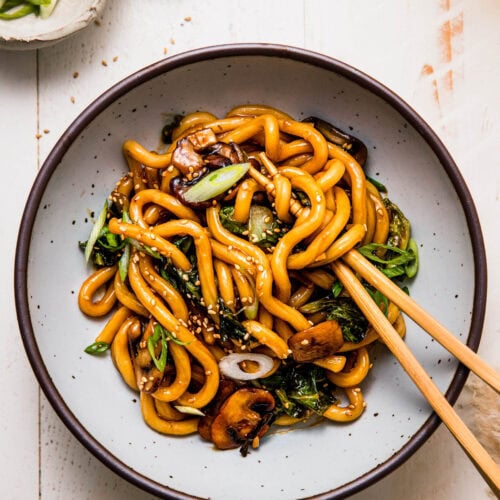
These Teriyaki Noodles are the ultimate quick-fix dinner when you’re craving something savory, sweet, and utterly satisfying. Tender udon noodles get tossed in a glossy, homemade teriyaki sauce with earthy mushrooms and crisp Napa cabbage, ready to serve in just about 20 minutes!
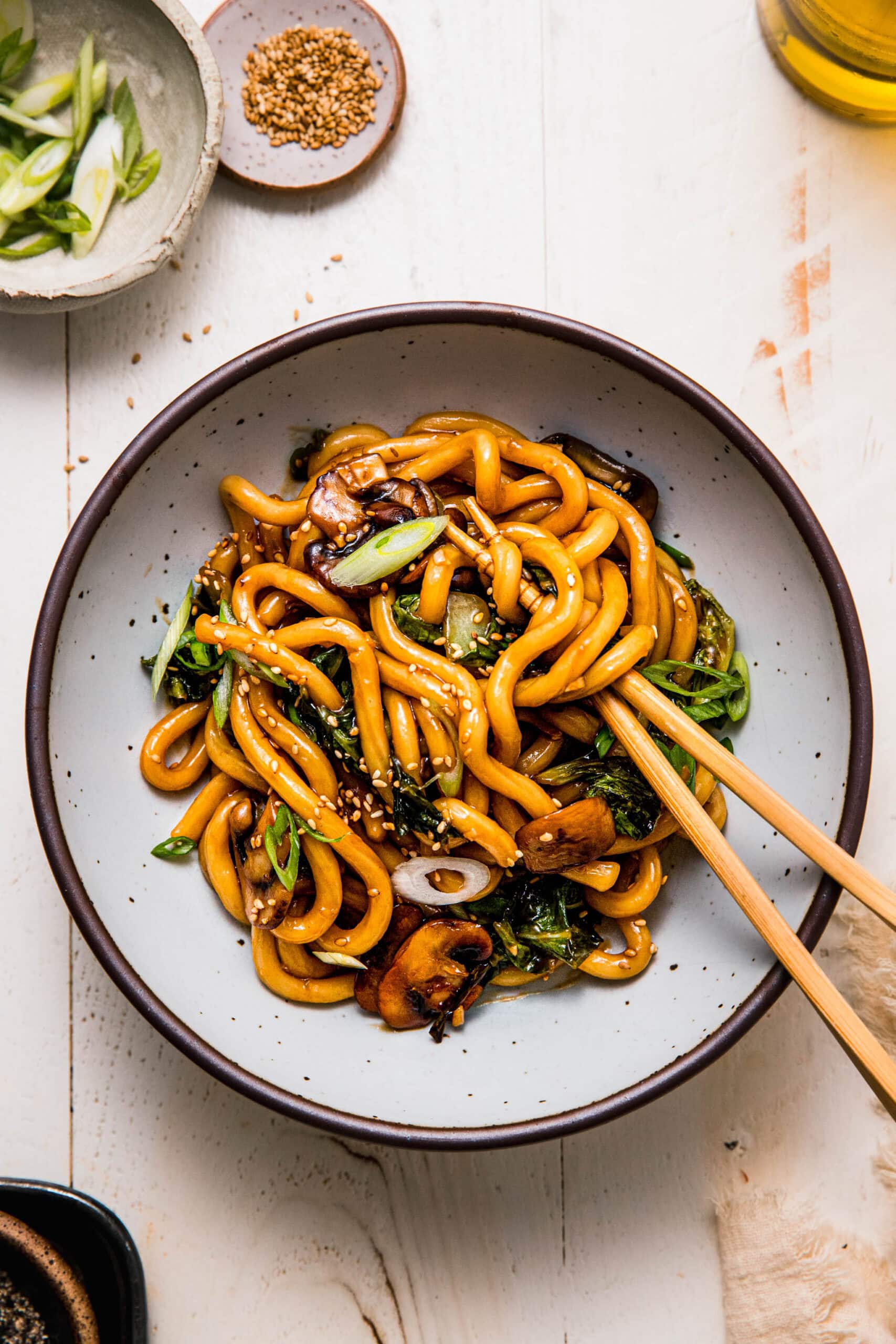
Table of Contents
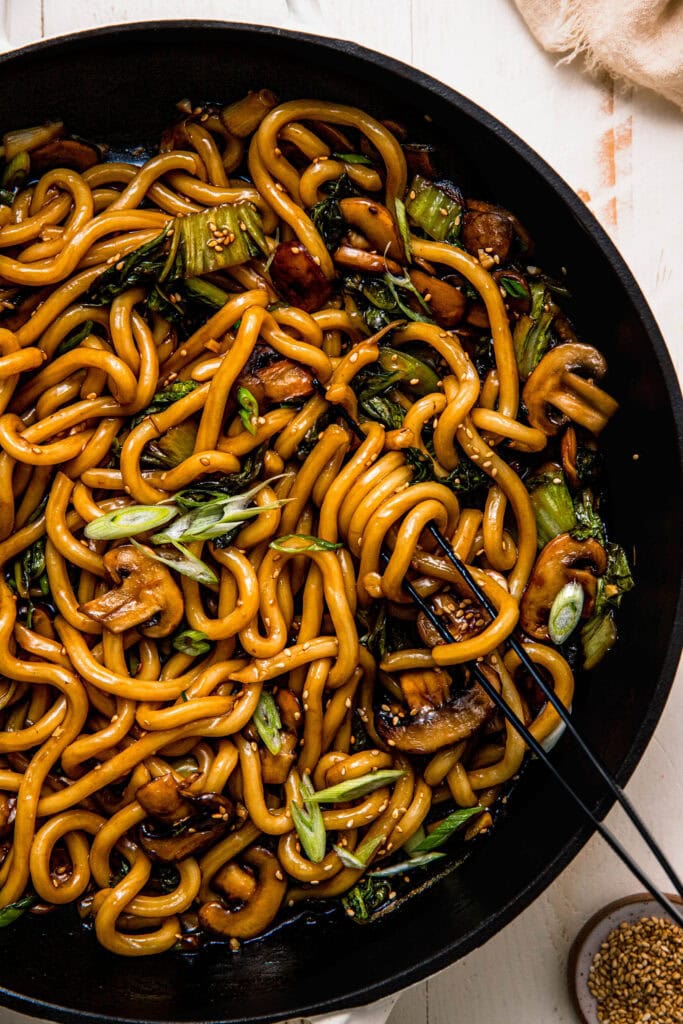
Once you try these saucy teriyaki noodles, you’ll never reach for a bottled sauce again. This recipe combines bouncy, chewy noodles with stir-fried vegetables in a perfectly balanced sweet-and-savory sauce that’s rich with garlic and ginger.
The main attraction of this dish is, of course, the homemade teriyaki sauce! Unlike store-bought sauce that can be overly sweet or artificially flavored, this homemade version is made with simple pantry ingredients that can easily be doubled and used in other dishes.

Ingredient notes
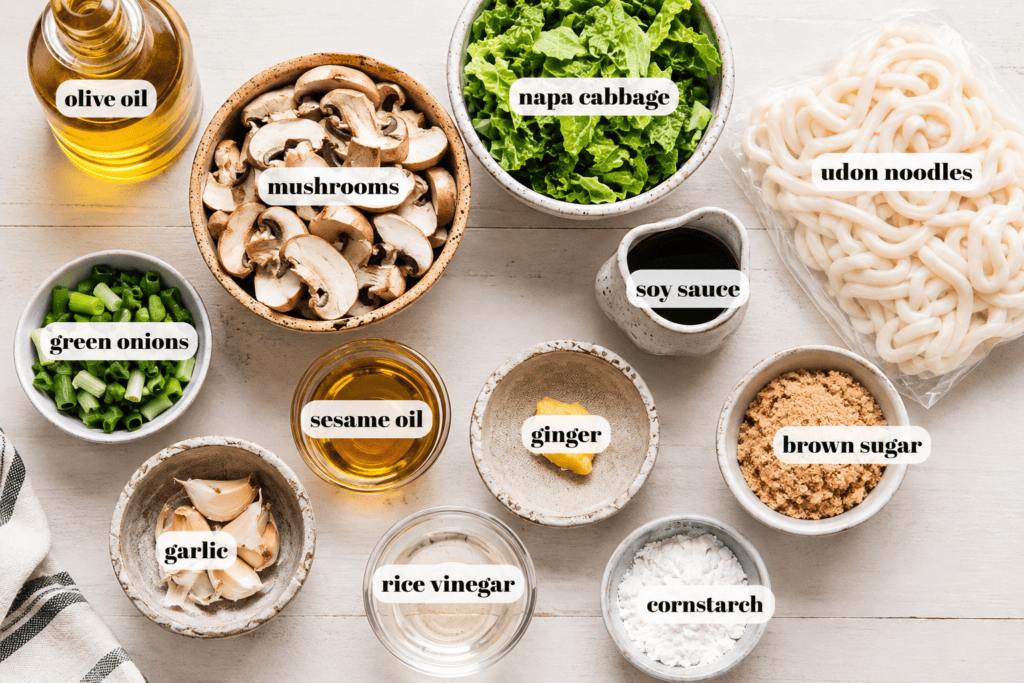
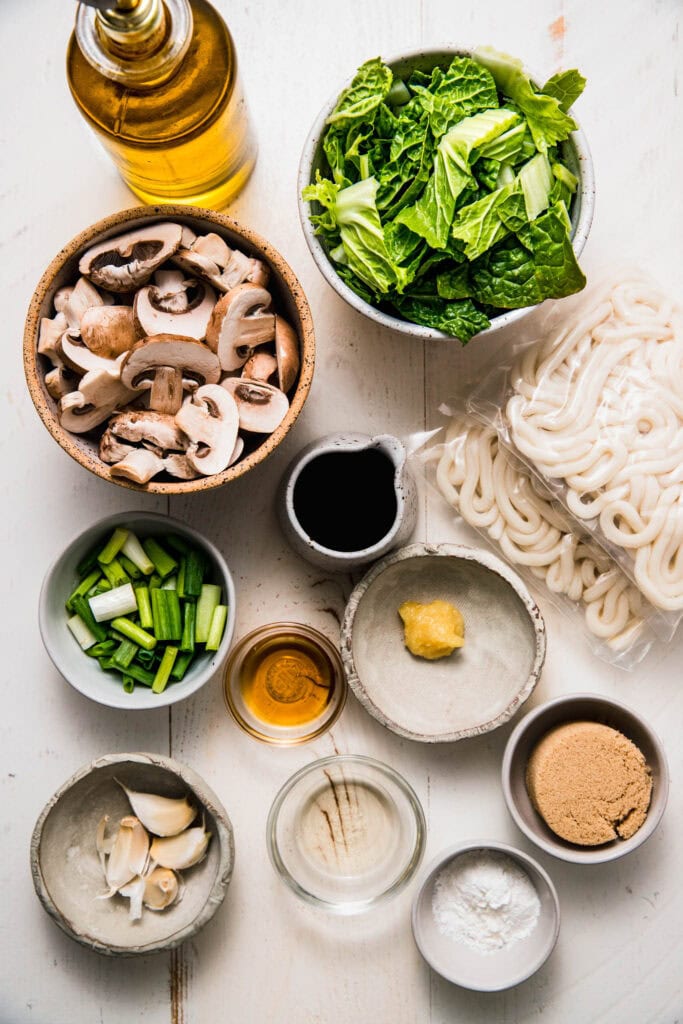
- Udon noodles – I’ve used 14 ounces of udon noodles here, but feel free to substitute with any noodle you have on hand. Lo mein, soba, or even spaghetti work well! Cook until they just separate and remain slightly chewy.
- Vegetable oil – Any neutral oil with a high smoke point works well here, including canola, corn, or avocado oil.
- Mushrooms – Shiitake mushrooms offer the most umami flavor, but cremini, button, or oyster mushrooms are delicious too.
- Napa cabbage – Also known as Chinese cabbage, this adds a mild, slightly sweet flavor and wonderful texture. Bok choy makes an excellent substitute if you can’t find Napa cabbage.
- Green onions – These add a fresh, mild oniony bite to the dish without overwhelming the other flavors. Save some extra for garnish!
- Soy sauce – I recommend low-sodium soy sauce or tamari to keep the dish balanced, but regular soy sauce works too if you prefer a saltier flavor.
- Dark brown sugar – This adds deep, molasses-like sweetness to the sauce. Light brown sugar works as well, or you can substitute honey or maple syrup.
- Rice wine vinegar – Adds a subtle tanginess that brightens the sauce. Apple cider vinegar or white wine vinegar can be substituted in a pinch.
- Toasted sesame oil – This brings a nutty, aromatic depth that’s essential for authentic teriyaki flavor. Don’t skip it!
- Garlic and ginger – Freshly minced garlic and grated ginger are non-negotiable here. They provide the aromatic backbone that makes this sauce so addictive.
- Cornstarch – Mixed with water to create a slurry that thickens the sauce to that perfect glossy, clingy consistency.
How to make it
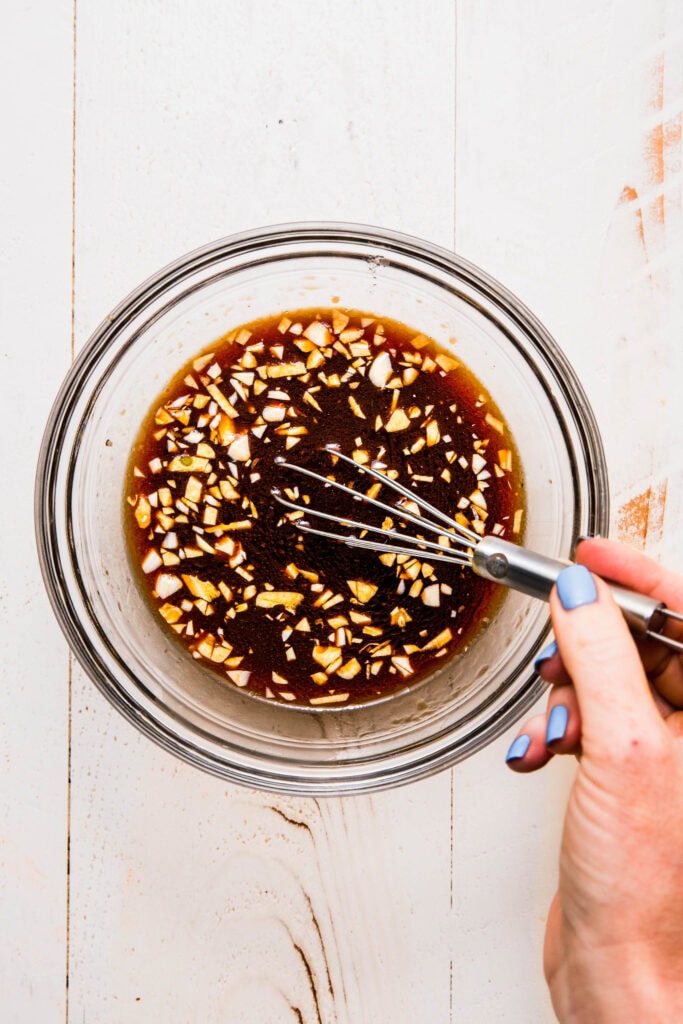
Step 1
Cook the noodles and prep the sauce
- Boil udon noodles until they separate easily and are tender but still slightly chewy, about 2 minutes.
- Drain and set aside while you prepare the vegetables and sauce.
- In a small bowl, make the cornstarch slurry. Add the rest of the sauce ingredients and stir until the sugar has fully dissolved and the sauce is well combined.
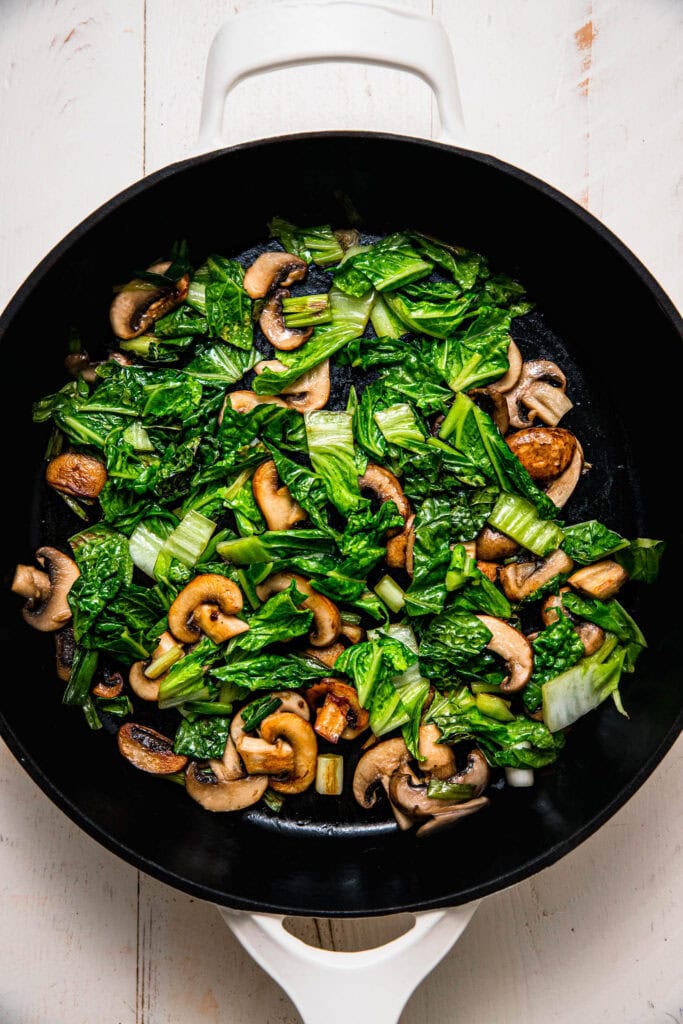
Step 2
Saute the vegetables
- Heat oil in a large skillet or wok over medium-high heat. Once hot, add the sliced mushrooms and cook until they begin to soften and release their moisture.
- Add the cabbage and continue cooking until the cabbage has wilted down. The veggies should be tender but still have some bite.
- Stir in the chopped green onions and cook for 1 minute more, just until they become fragrant.
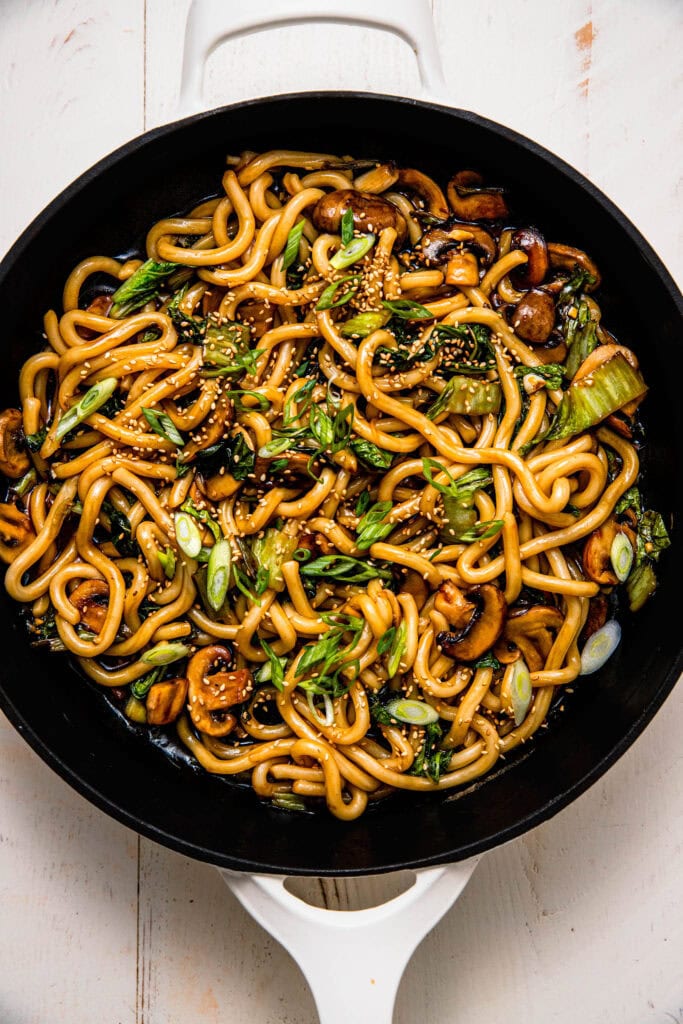
Step 3
Combine and serve
- Add the noodles and pour the sauce over everything and toss well to ensure an even coating.
- Let everything simmer together for 2-3 minutes. The sauce will thicken and turn glossy as it heats.
- Taste and adjust the seasonings. For extra heat, add a pinch of red pepper flakes or a drizzle of chili oil.
- Serve garnished with green onions and a sprinkle of sesame seeds, if desired.
Ways to Use Extra Teriyaki Sauce
This teriyaki sauce is so good, you’ll want to double (or triple!) the batch. It keeps beautifully in the fridge for up to two weeks, and having it on hand means a delicious meal is never far away. Here are a few ways to put that extra sauce to work:
- Teriyaki Chicken Rice Bowls: Grill or pan-sear chicken thighs until golden and cooked through, then toss them in a few tablespoons of teriyaki sauce during the last few minutes of cooking. Serve over steamed rice with broccoli or snap peas for an easy, satisfying dinner.
- Teriyaki salmon or tofu: Brush the sauce onto salmon fillets or slabs of extra-firm tofu and bake or broil until caramelized and sticky. The sauce forms a gorgeous, glossy glaze that’s absolutely irresistible.
- Stir-Fried Vegetables: Short on time? Toss a handful of pre-cut stir-fry veggies in a hot pan with a splash of the sauce and serve over rice or noodles for a 10-minute meal.
- Teriyaki meatballs: Mix the sauce into turkey or pork meatballs before baking, or simply toss cooked meatballs in the sauce for a quick appetizer or main dish.
- Rice bowl drizzle: Keep a small jar in the fridge to drizzle over grain bowls, roasted vegetables, or even scrambled eggs for an instant flavor boost.
- Marinade for grilled meats: Use the sauce (without the cornstarch slurry) as a marinade for chicken, beef, or pork. Let it sit for at least 30 minutes (or overnight) before grilling or pan-searing for maximum flavor.
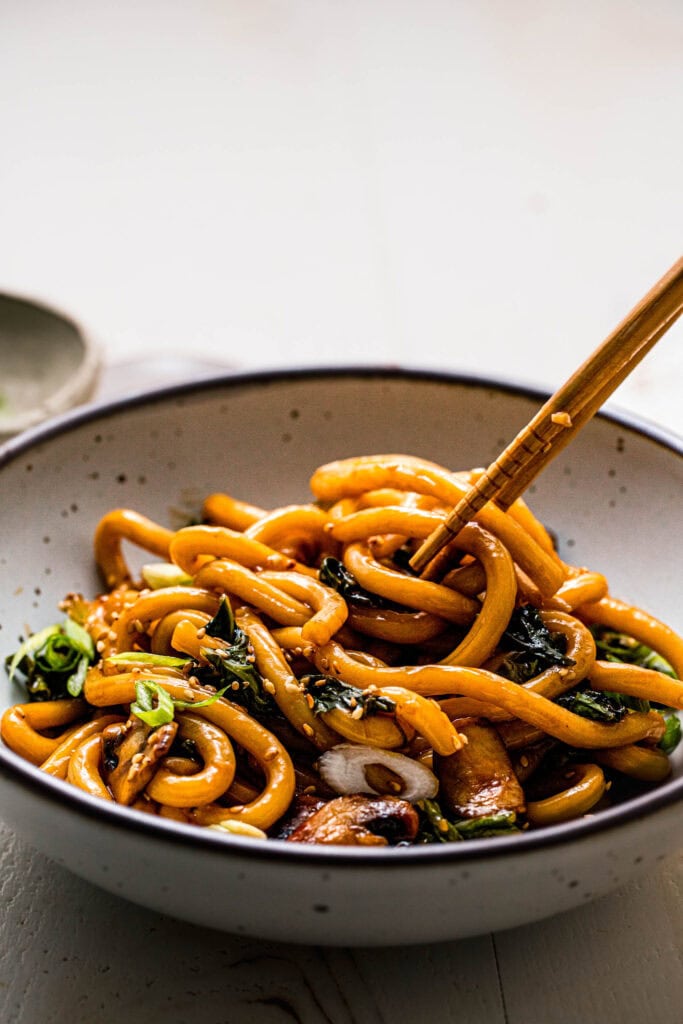
Tips and tricks
- This recipe moves fast, so I recommend prepping all your vegetables and mixing the sauce before you start cooking. Having everything ready to go will make your process easier and stress-free.
- Don’t overcrowd the pan when cooking the vegetables. If your skillet is too small, cook the mushrooms and cabbage in batches to ensure they brown nicely rather than steaming.
- Taste the sauce before adding it to the noodles to ensure the flavor balance is right. If it tastes too salty, add a bit more brown sugar; if too sweet, add an extra splash of soy sauce or vinegar.
- For the best texture, cook the noodles just until they separate. Overcooking will make them mushy and less satisfying. Rinsing isn’t necessary unless you’re not using them immediately.
- If you’re making extra sauce specifically for future use, omit the cornstarch slurry until you’re ready to use it. The sauce will thicken better when heated fresh.
Variations
Similar to other noodle stir-fries, teriyaki noodles can easily be customized to your liking. Feel free to get creative with this recipe, or try these ideas to make it your own:
- Add protein: Toss in sliced chicken breast, beef strips, shrimp, or tofu for a heartier meal. Cook the protein first, remove it from the pan, then add it back at the end with the noodles.
- Boost of veggies: Mix and match with snap peas, bell peppers, broccoli florets, carrots, edamame, or baby corn. Just adjust cooking times accordingly since harder vegetables need a bit more time in the pan.
- Make it spicy: Add a teaspoon of sriracha, gochujang, or red pepper flakes to the sauce for a kick of heat.
- Add crunch: Top with toasted sesame seeds, crushed peanuts, or crispy fried shallots for extra texture.
- Gluten-free: Use tamari instead of soy sauce and ensure your noodles are made from rice or buckwheat.
Serving suggestions
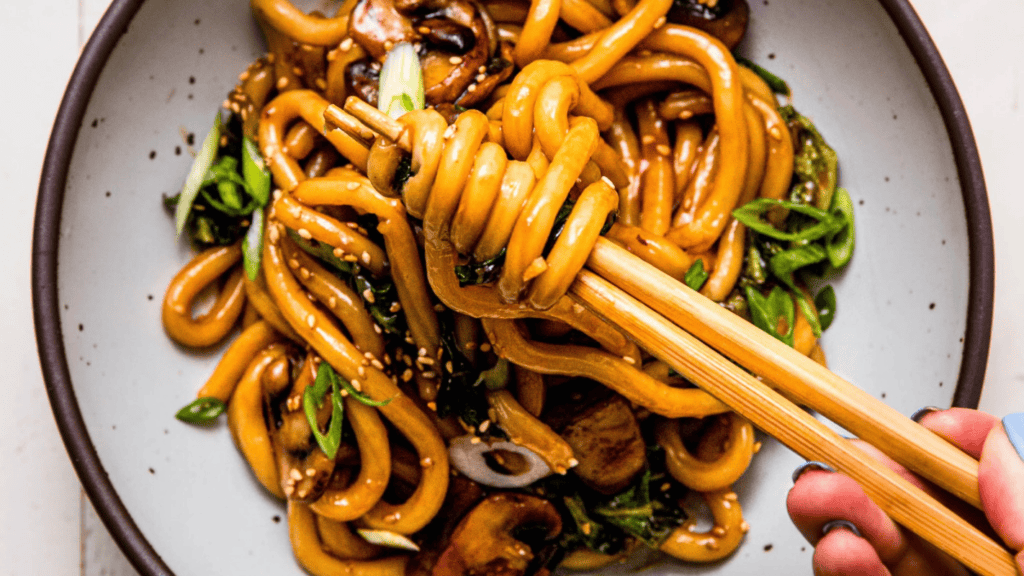
Remember, small finishing touches, such as sliced green onions, sesame seeds, a drizzle of sesame oil, or a sprinkle of red pepper flakes will completely elevate both the flavor and the presentation of this dish. These teriyaki noodles are satisfying enough to enjoy on their own, but they also pair wonderfully with:
- Vegetable spring rolls or egg rolls
- Miso soup
- Steamed or stir-fried bok choy
- Gyoza or potstickers with dipping sauce
Storing
These teriyaki noodles are best served fresh out of the skillet, as the noodles can become sticky when reheated. However, if you have leftovers, store them in an airtight container in the refrigerator for up to 2 to 3 days.
To reheat, warm them in a skillet over medium heat with a splash of water or a drizzle of oil to loosen the sauce. Alternatively, microwave for 1 to 2 minutes, stirring halfway through. Avoid overcooking during reheating, as the noodles can become mushy.
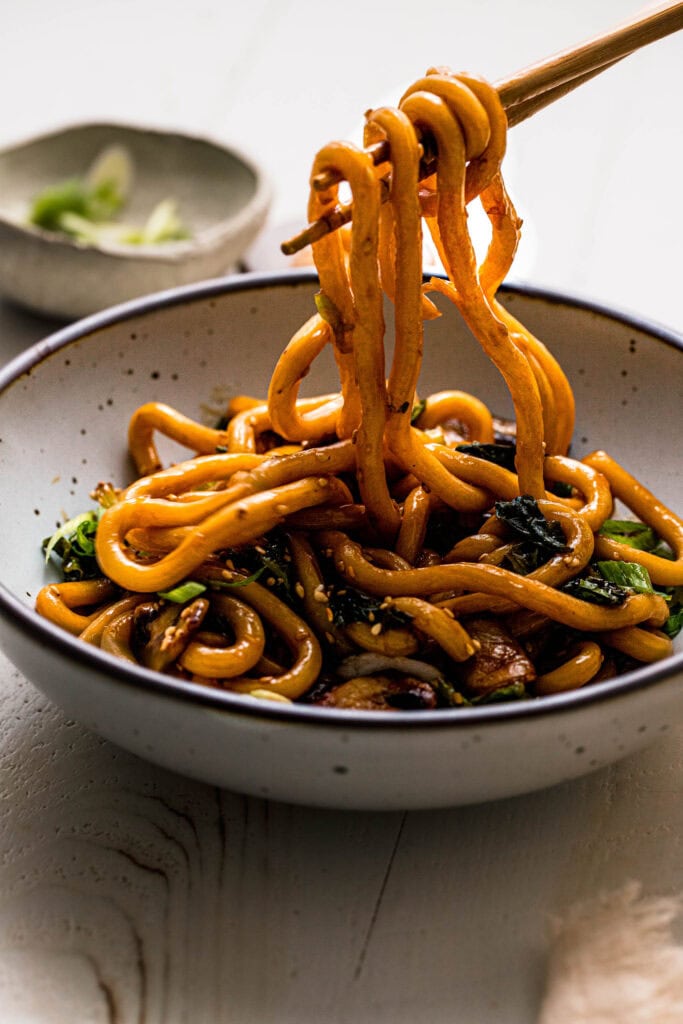

Erin’s wine pairings for teriyaki noodles
Pair your Teriyaki Noodles with one of these favorites:
- Gewürztraminer is a fantastic choice for this noodle dish. Its aromatic, slightly spicy profile and off-dry sweetness beautifully complement the sweet-savory teriyaki sauce while standing up to the earthy mushrooms and ginger.
- Alternatively, go with a dry or off-dry Riesling. The crisp acidity cuts through the richness of the sauce, while the subtle fruitiness balances the salty soy and sweet brown sugar.
- For red wine lovers, try a light-bodied Pinot Noir with bright red fruit and low tannins. Its earthiness pairs wonderfully with the mushrooms, and it won’t overpower the delicate flavors of the dish.
More Asian noodle dishes
-
new!
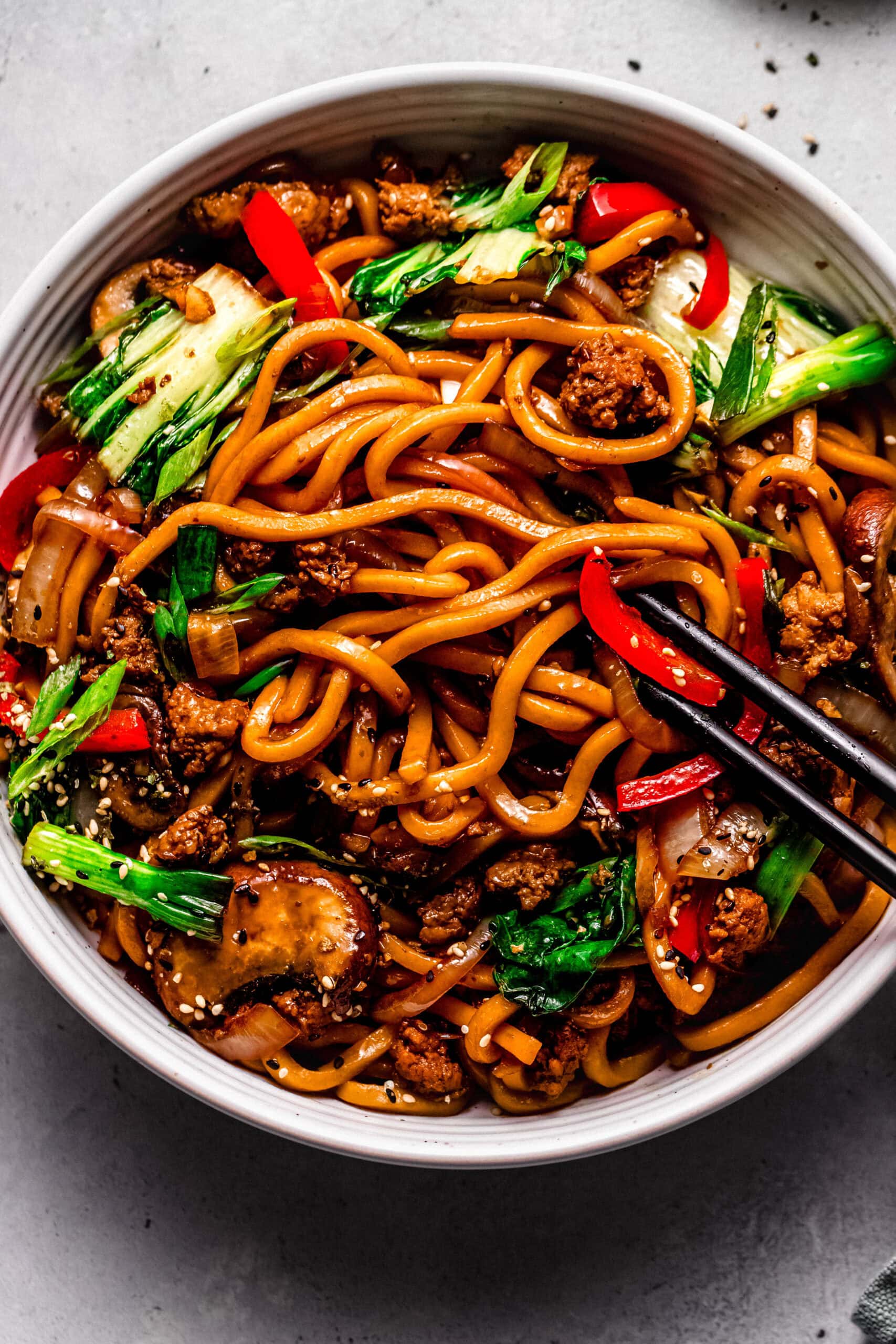
Yaki Udon
-
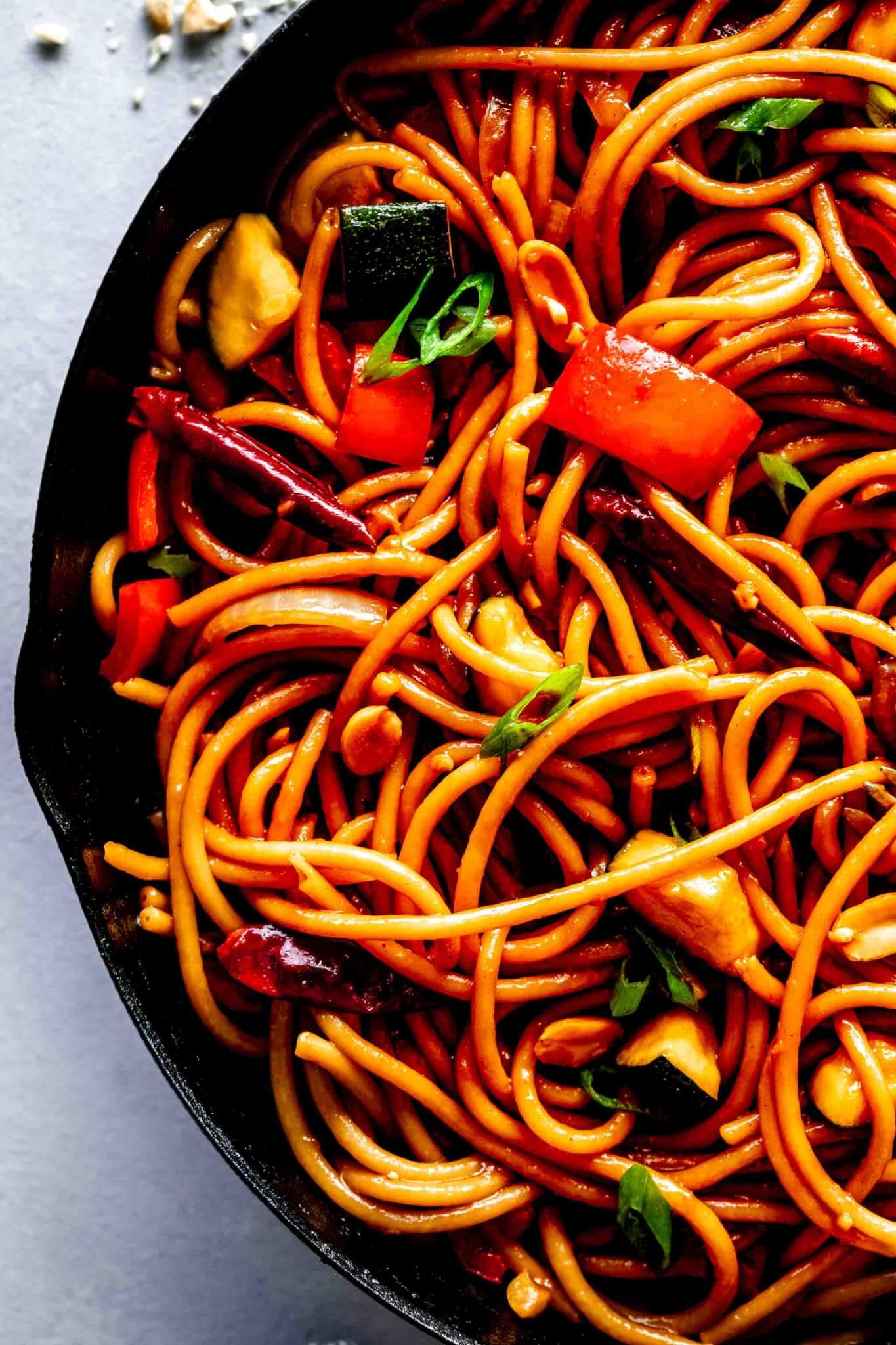
new!
Kung Pao Noodles
-

new!
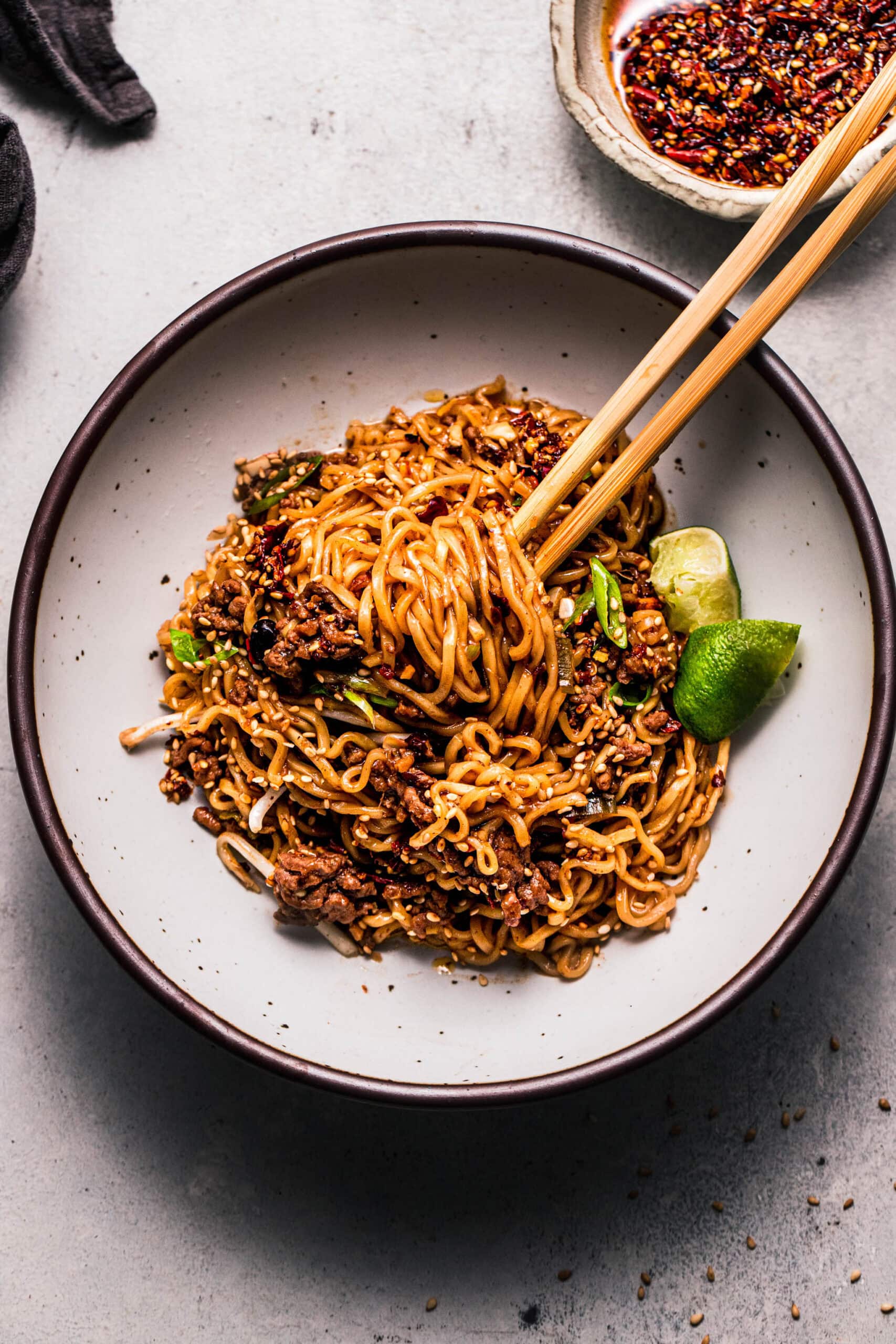
Gochujang Noodles

Did you make these teriyaki noodles?
If you loved these teriyaki noodles, I would appreciate it so much if you would leave a ⭐️star review⭐️! Also, be sure to snap a picture of your finished dish and share it with me on Instagram using the hashtag #platingsandpairings and tagging me @platingsandpairings.
For more great Platings & Pairings recipes, be sure to follow me on Pinterest, Facebook, YouTube, Twitter, and TikTok.
Full Recipe
Teriyaki Noodles
Equipment
Ingredients
- 14 ounces udon noodles (or any kind of noodle)
- 1 Tablespoon vegetable oil (or any neutral oil such as corn or canola)
- 5 ounces mushrooms (sliced, shiitake, crimini, etc. (about 2 cups sliced mushrooms))
- 2 cups napa cabbage (or bok choy, chopped)
- 3 green onions (chopped)
Teriyaki Sauce
- 2 teaspoons cornstarch
- ¼ cup water
- 1/4 cup brown sugar
- 1/3 cup soy sauce (low-sodium or tamari)
- 1/2 Tablespoon rice wine vinegar
- ½ teaspoon toasted sesame oil
- 2 cloves garlic (finely chopped or grated)
- 1 teaspoon ginger (peeled and and grated or minced)
Instructions
- Bring a pot of water to boil and gently add 14 ounces udon noodles and cook until the noodles separate easily, about 2 minutes. Drain the noodles.
- Meanwhile, heat 1 Tablespoon vegetable oil in a large skillet over medium high heat. Add the 5 ounces mushrooms, 2 cups napa cabbage and 3 green onions. Saute for about 5-7 minutes or until wilted.
- While the veggies are cooking, in a medium bowl, whisk together the 2 teaspoons cornstarch, ¼ cup water, 1/4 cup brown sugar, 1/3 cup soy sauce, 1/2 Tablespoon rice wine vinegar, ½ teaspoon toasted sesame oil, 2 cloves garlic and 1 teaspoon ginger, until smooth.
- Combine the veggies with the cooked noodles and pour the sauce on top. Stir to coat.
- Let simmer for 2-3 minutes until the sauce is thick and glossy.
Notes
- These teriyaki noodles are best served fresh out of the skillet, as the noodles can become sticky when reheated. However, if you have leftovers, store them in an airtight container in the refrigerator for up to 2 to 3 days.
- To reheat, warm them in a skillet over medium heat with a splash of water or a drizzle of oil to loosen the sauce. Alternatively, microwave for 1 to 2 minutes, stirring halfway through. Avoid overcooking during reheating, as the noodles can become mushy.
- This recipe moves fast, so I recommend prepping all your vegetables and mixing the sauce before you start cooking. Having everything ready to go will make your process easier and stress-free.
- Don’t overcrowd the pan when cooking the vegetables. If your skillet is too small, cook the mushrooms and cabbage in batches to ensure they brown nicely rather than steaming.
- Taste the sauce before adding it to the noodles to ensure the flavor balance is right. If it tastes too salty, add a bit more brown sugar; if too sweet, add an extra splash of soy sauce or vinegar.
- For the best texture, cook the noodles just until they separate. Overcooking will make them mushy and less satisfying. Rinsing isn’t necessary unless you’re not using them immediately.
- If you’re making extra sauce specifically for future use, omit the cornstarch slurry until you’re ready to use it. The sauce will thicken better when heated fresh.
- Add protein: Toss in sliced chicken breast, beef strips, shrimp, or tofu for a heartier meal. Cook the protein first, remove it from the pan, then add it back at the end with the noodles.
- Boost of veggies: Mix and match with snap peas, bell peppers, broccoli florets, carrots, edamame, or baby corn. Just adjust cooking times accordingly since harder vegetables need a bit more time in the pan.
- Make it spicy: Add a teaspoon of sriracha, gochujang, or red pepper flakes to the sauce for a kick of heat.
- Add crunch: Top with toasted sesame seeds, crushed peanuts, or crispy fried shallots for extra texture.
- Gluten-free: Use tamari instead of soy sauce and ensure your noodles are made from rice or buckwheat.

Leave a Reply