
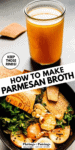
This easy parmesan broth recipe is rich and packed with umami-flavor. Use in in place of chicken stock or vegetable broth to make soups, sauces, pasta dishes and risottos EXTRA delicious!

Table of Contents
I talked in this post about how you’ll almost always find a mysterious bag of bones in my freezer. Right alongside that bag of bones, you’ll also find a bag of parmesan rinds.

While I’m a total minimalist in my everyday life (i.e. nothing on the counters, cleaning my closet out quarterly, etc.), I’m the total opposite with my freezer.
I stash it all away in there… Why?
These little scraps and bits and bobs are 🌟pure gold🌟 for making homemade stocks! From bone broth, to seafood stock, and now parmesan broth… I’m here to convince you all to join me in this hoarding.
I mean… Parm is expensive. So, let’s get the most bang for our buck.
When you finish off a piece of parmesan, stash that rind away in a little baggie in your freezer, so that you can make parmesan stock. Once you have about 5 large parmesan rinds, you’re ready to go!
These umami bombs are about to change your life…

Why make it?
This homemade broth packs a umami, cheesy punch into dishes like soups, risottos, and pasta dishes. Plus, it’s super affordable since it’s basically made from kitchen scraps.

Ingredient notes
- Parmesan Rinds – You’ll need about 5 large parmigiano reggiano rinds for this recipe. Don’t have any on hand? Many grocery store cheese counters carry parmesan rinds.
- Water
- Olive Oil
- Onion + Garlic – You can also swap in a shallot.
- Dry White Wine – I prefer to use pinot gris, chardonnay or sauvignon blanc. You can make this broth without wine too. The wine adds a little acidity and depth of flavor, but your Parmesan broth will still be delicious without it.
- Fresh Thyme + Parsley Sprigs
- Salt
How to save and store parmesan rinds
You don’t need to make Parmesan broth every time you finish a block of cheese! I like to save my Parmesan rinds in a freezer-safe bag so I always have some on hand when I’m ready to make a batch.
Simply place the rinds in a freezer bag and store them in the freezer. You can add new rinds to the same bag as you finish them. Once you have about ⅔ pound (or 5 large rinds), you’ll have enough to make this homemade Parmesan broth.
There’s no need to thaw the rinds before using them. Just toss them straight into the pot!
Here’s a post about all my favorite ways to use parmesan rinds.

How to make it
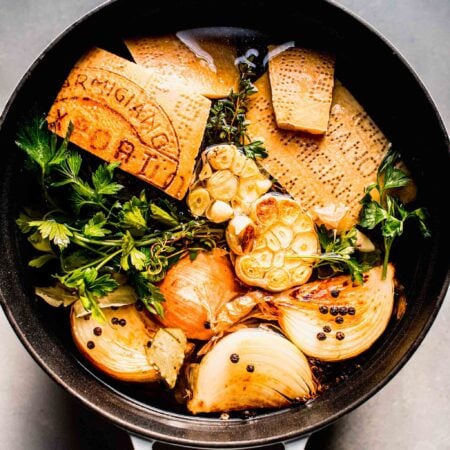
- Heat the oil in a large stockpot or dutch oven over medium-high heat. Add onion and garlic, and cook, cut-side down, until slightly charred, about 3 minutes.
- Add wine and bring to a simmer. Cook, scraping any brown bits from the bottom of the pot, until liquid is reduced by half, about 2 minutes.
- Add cold water, parmesan rinds, thyme, parsley, peppercorns and bay leaves. Bring to a boil.
- Reduce to low heat and simmer, stirring occasionally, until broth is very flavorful and reduced by about half, at least 2 ½ hours, or longer if time permits.
- Strain the broth through a fine-mesh sieve and discard the solids.
- Season to taste with salt, if desired.
- Enjoy in your favorite recipe.
Slow Cooker Instructions
Brown the onion and garlic on the stove in a large skillet. Add the wine and let it reduce. Then add it to a slow cooker with the remaining ingredients. Cover and cook on LOW for 6-8 hours, or HIGH for 3-4 hours.
Instant Pot Instructions
Brown the onion and garlic using the SAUTE function. Add the wine and let it reduce. Place the lid on the pot and set the valve to seal. Cook on manual HIGH pressure for 10 minutes. Let the pressure release naturally for 10 minutes, then release the remaining pressure.


Tips
- Make sure your rinds are clean. Trim off any moldy looking bits before using.
- Other hard cheese rinds will work in this recipe too. Try rinds from manchego, pecorino romano, cheddars and more.

Parmesan broth uses
- Use it instead of water when you’re cooking rice or pasta.
- Pots of beans. Parmesan broth goes especially well with white beans.
- Use it as a base for your favorite soup recipes, like Minestrone, French Onion Soup, Marry Me Chicken Soup and Italian Wedding Soup.
- Brodo. Use this parmesan broth for making tortellini en brodo extra cheesy + delicious.
- Add it to your mashed potatoes or creamy polenta.
- The hot broth is an amazing flavor enhancer for risotto.
- Use it to braise vegetables like Lacinato kale, broccoli, spinach or cabbage.
- Pack extra flavor into your Thanksgiving Stuffing.
- Add it to this parmesan cream sauce for an extra punch of parm flavor!
FAQs
Parmesan broth is a rich, savory stock made by simmering Parmesan cheese rinds with water, aromatics, and herbs. It has a deep umami flavor with a subtle cheesy richness that makes it a delicious substitute for chicken broth or vegetable stock in soups, risottos, sauces, and pasta dishes.
Yes! Parmesan rinds are edible, but they’re very hard and chewy, so they’re not particularly enjoyable to eat on their own. Instead, save them to add flavor to soups, sauces, and homemade Parmesan broth. The rind softens as it simmers and releases its delicious savory flavor into the broth. Strain it out before serving.
You can often find Parmesan rinds at the cheese counter of grocery stores, specialty cheese shops, and Italian markets. Some stores sell them in packages specifically for making broth. You can also save the rinds from blocks of Parmigiano Reggiano and store them in a freezer bag until you have enough to make a batch.
Traditional Parmesan cheese is made with animal rennet, so it isn’t considered vegetarian by many vegetarians. If you’d like to make a vegetarian version, look for a Parmesan-style hard cheese made with microbial or vegetable rennet. You can also use vegetable broth as a base if you’d like a lighter cheese flavor.
Absolutely! Parmesan broth is a delicious substitute for chicken broth or vegetable stock in many recipes. Try it in risotto, minestrone, creamy soups, pasta sauces, polenta, or when cooking beans and grains. Keep in mind that it has a more pronounced savory, cheesy flavor than traditional broth, so it works especially well in Italian-inspired dishes.
I don’t recommend home-canning Parmesan broth using standard broth canning instructions. This recipe contains cheese and other ingredients that haven’t been tested for safe home canning. Instead, refrigerate or freeze the broth for storage.

Storage instructions
Store leftovers in an airtight container in the fridge for up to 5 days. Or, freeze for up to three months.
How to freeze it
- I like to freeze my parmesan stock in these silicone ice cube molds for easy use in recipes. Once the cubes are frozen, I package them up into a large ziploc bag.
- Each cube is about 1/3 cup of broth. If I need to thaw some parmesan broth quickly, it’s easy to just pop a few of these cubes into a small saucepan or into a microwave to thaw them quickly. It’s much faster than thawing an entire container of stock.
- You can also freeze the parmesan rind broth in the same silicone mold that I use to make these Instant Pot Sous Vide Egg Bites!
Parmesan recipes
More kitchen tips

Did you try this parmesan rind broth recipe?
If you loved this parmesan stock recipe, I would appreciate it so much if you would leave a ⭐️star review⭐️! Also, be sure to snap a picture of your finished dish and share it with me on Instagram using the hashtag #platingsandpairings and tagging me @platingsandpairings.
For more great Platings and Pairings recipes, be sure to follow me on Instagram, TikTok, Pinterest and Facebook.
Full Recipe
Parmesan Broth
Equipment
Ingredients
- 2 Tablespoons olive oil
- 1 onion (quartered)
- 1 head garlic (cut in half crosswise)
- ½ cup dry white wine
- 12 cups water
- ⅔ pound Parmesan rinds (about 5 large rinds)
- 6 sprigs fresh thyme
- 4 sprigs fresh parsley
- 2 teaspoons whole black peppercorns
- 2 bay leaves
- Salt (to taste)
Instructions
- Heat the 2 Tablespoons olive oil in a large dutch oven or pot over medium-high heat. Add 1 onion and 1 head garlic, and cook, cut-side down, until slightly charred, about 3 minutes.
- Add ½ cup dry white wine and bring to a simmer. Cook, scraping any browned bits from the bottom of the pot, until liquid is reduced by half, about 2 minutes.
- Add 12 cups water, ⅔ pound Parmesan rinds, 6 sprigs fresh thyme, 4 sprigs fresh parsley, 2 teaspoons whole black peppercorns and 2 bay leaves. Bring to a boil.
- Reduce heat to a simmer and cook, stirring occasionally, until broth is very flavorful and reduced by about half, at least 2 ½ hours, or longer if time permits.
- Strain the broth through a fine-mesh strainer and discard the solids. Season with salt, to taste, if desired.
- Enjoy in your favorite recipe.
Notes
-
Make sure your rinds are clean. Trim off any moldy looking bits before using.
-
Other hard cheese rinds will work in this recipe too. Try rinds from manchego, pecorino romano, cheddars and more.







Leave a Reply